A Reminder to Keep My Eyes on Christ
1. “There is one Door, one Way, and that Way is Jesus Christ”
This is at the very center of the Gospel.
Jesus says:
“I am the way and the truth and the life. No one comes to the Father except through me.” John 14:6
Jesus also says:
“I am the gate; whoever enters through me will be saved.” John 10:9
So when you speak of one Door and one Way, you are pointing directly to Christ. Scripture does not present many different ways to the Father. Jesus Himself says that He is the Way.
The Bible begins with humanity separated from God because of sin, and it ends with God’s people dwelling with Him. Christ is the One through whom we are brought back to God.
2. “He is God, and I am not”
This is a deeply biblical understanding of who God is and who we are.
God is the Creator. We are His creation.
Genesis 1:1 begins with:
“In the beginning God created the heavens and the earth.”
Psalm 100:3 says:
“It is he who made us, and we are his.”
Isaiah 45:5 says:
“I am the LORD, and there is no other.”
Romans 9:20 reminds us that the creature does not stand above the Creator.
Revelation 4:11 says:
“You are worthy, our Lord and God, to receive glory and honor and power, for you created all things.”
So when you say, “He is God, and I am not,” you are expressing humility before God. He is Lord. He is Creator. He is the One who knows all things and holds all things together.
3. “This world is broken by sin, that we have fallen short of God, and that we cannot save ourselves”
That agrees with what Scripture teaches from Genesis onward.
Genesis 3 records humanity’s rebellion against God. Sin enters human history, and death and separation from God follow.
Romans 3:23 says:
“For all have sinned and fall short of the glory of God.”
Titus 3:5 says:
“He saved us, not because of righteous things we had done, but because of his mercy.”
We cannot save ourselves through our own goodness. We need God’s mercy.
This is one of the reasons the coming of Christ is so important. God does for us what we cannot do for ourselves.
4. “But God made a way for us through Christ”
That is the Gospel.
We could not make our own way back to God, so God provided the way through His Son.
Jesus says:
“No one comes to the Father except through me.” John 14:6
Peter says:
“Salvation is found in no one else.” Acts 4:12
Paul says:
“God was reconciling the world to himself in Christ.” 2 Corinthians 5:19
Throughout Scripture, God reveals His purposes and promises concerning redemption. Those promises find their fulfillment in Jesus Christ.
So when you say that God made a way through Christ, you are expressing one of the central truths of the Gospel.
5. “This life is not the end”
That is clearly taught in Scripture.
Jesus says:
“I am the resurrection and the life. The one who believes in me will live, even though they die.” John 11:25
Paul teaches in 1 Corinthians 15 that the resurrection of Jesus is the foundation of the resurrection to come.
Revelation 21:4 says:
“There will be no more death or mourning or crying or pain.”
Death does not have the final word.
The Christian hope is resurrection and eternal life through Jesus Christ.
6. “God has given us a promise, a living hope through Jesus Christ”
Peter uses almost exactly this language:
“He has given us new birth into a living hope through the resurrection of Jesus Christ from the dead.” 1 Peter 1:3
That is important because your hope is not based on yourself.
It is based on Jesus Christ.
It is based on His death.
It is based on His resurrection.
It is based on the promises of God.
Peter continues by speaking about an inheritance kept for God’s people in heaven in 1 Peter 1:4.
So the hope you are describing is not simply wishing for something better. It is a hope grounded in what God has promised and what Christ has accomplished.
7. “The promise of eternal life and the restoration of all things”
This is also consistent with Scripture.
The Bible speaks about eternal life, resurrection, the return of Christ, the restoration of creation, the new heaven and new earth, and God dwelling with His people.
Acts 3:21 speaks about the:
“restoration of all things.”
Romans 8:21 speaks of creation being liberated from its bondage to decay.
Revelation 21:1 says:
“Then I saw ‘a new heaven and a new earth.’”
Revelation 21:3 says:
“God’s dwelling place is now among the people, and he will dwell with them.”
Revelation 21:4 says there will be no more death, mourning, crying, or pain.
There is also a beautiful connection between Genesis and Revelation.
In Genesis, humanity loses access to the tree of life after sin enters the world.
In Revelation 22, the tree of life is present again, and Revelation 22:3 says:
“No longer will there be any curse.”
This shows the completeness of God’s work of redemption and restoration.
8. “That is the hope I live for while I am here on this earth”
This is consistent with the way Scripture teaches believers to live.
Paul says:
“Set your minds on things above, not on earthly things.” Colossians 3:2
Peter tells believers to put their hope fully in the grace that will be brought to them when Jesus Christ is revealed, in 1 Peter 1:13.
At the same time, Scripture calls us to live faithfully in this present life. We are called to love others, serve others, forgive, endure, work, give, pray, and walk faithfully with God.
Our hope is beyond this present life, but we are still called to faithfully live the life God has given us now.
9. “I don’t want to live for the praise of people”
Jesus speaks very clearly about this.
Matthew 6:1 says:
“Be careful not to practice your righteousness in front of others to be seen by them.”
Jesus also warns about people who pray publicly because they want others to notice them and think highly of them, in Matthew 6:5.
Paul asks:
“Am I now trying to win the approval of human beings, or of God?” Galatians 1:10
So your desire not to live for applause or recognition is consistent with what Jesus taught.
The issue is not whether people see what we do. The issue is why we are doing it.
We can serve people, pray publicly, help others, and do good while still making God the reason and the focus.
10. “I want to live for God, knowing that He sees the heart”
This is also deeply rooted in Scripture.
When Samuel was looking at Jesse’s sons, God told him:
“The LORD looks at the heart.” 1 Samuel 16:7
God sees what other people cannot see.
He sees our motives.
He sees our thoughts.
He sees our struggles.
He sees our failures.
He sees our faithfulness.
Jesus repeatedly confronted religious people who looked righteous outwardly while their hearts were far from God.
So wanting to live for God because He sees the heart is completely consistent with Scripture.
11. “My hope is not in myself; my hope is in Christ”
Scripture continually directs our confidence away from ourselves and toward God.
Our salvation does not come from our own strength.
Our righteousness does not come from our own accomplishments.
Our future does not depend upon how strong we are.
Our hope is in Christ.
Peter calls it a living hope through the resurrection of Jesus Christ in 1 Peter 1:3.
Paul says:
“Christ in you, the hope of glory.” Colossians 1:27
That makes your statement very clear.
You are not saying, “I have enough strength in myself to win.”
You are saying, “My hope is in Christ.”
That is a very different thing, and it is consistent with the message of Scripture.
12. “From Genesis to Revelation, the message points back to Him”
Jesus Himself taught that the Scriptures spoke of Him.
After His resurrection, Jesus said:
“Everything must be fulfilled that is written about me in the Law of Moses, the Prophets and the Psalms.” Luke 24:44
From Genesis onward, God reveals Himself, His holiness, His covenant, His judgment, His mercy, His promises, and His plan of redemption.
Genesis begins with creation.
Genesis 3 records the entrance of sin.
God continues to reveal His covenant promises.
The prophets speak about God’s salvation and the coming Messiah.
Jesus Christ comes.
He gives Himself for sinners.
He is crucified.
He rises from the dead.
The Gospel is proclaimed.
The followers of Christ are called people of the Way.
The apostles teach believers to live in faith, holiness, love, perseverance, and hope.
Revelation brings us to the return of Christ, the defeat of death, the removal of the curse, the restoration of creation, and God dwelling with His people.
Scripture closes with the words:
“Yes, I am coming soon.” Revelation 22:20
This message is consistent with the whole of Scripture.
At its heart, you are saying:
God is God, and I am not.
I have sinned and cannot save myself.
God made the way through Jesus Christ.
Jesus is the Door and the Way.
This present life is not the end.
My hope is not in myself or in the praise of people.
My hope is in Christ, His resurrection, eternal life, and the promises of God.
I want to live for Him while I am here, trusting the promise He has given me.
Posted in Religion by PE Van Blerk with comments disabled.
Die Here se Gebed — Matteus 6:9–13
“Onse Vader wat in die hemele is, laat u Naam geheilig word; laat u koninkryk kom; laat u wil geskied, soos in die hemel net so ook op die aarde; gee ons vandag ons daaglikse brood; en vergeef ons ons skulde, soos ons ook ons skuldenaars vergewe; en lei ons nie in versoeking nie, maar verlos ons van die Bose. Want aan U behoort die koninkryk en die krag en die heerlikheid tot in ewigheid. Amen.”
— Matteus 6:9–13, AFR53
1. “Onse Vader”
Wat beteken dit volgens die Bybel?
Jesus leer ons om God as Vader aan te spreek.
Jesus sê:
“After this manner therefore pray ye: Our Father…”
— Matteus 6:9
God is nie bloot ‘n onpersoonlike mag nie. Die Skrif openbaar Hom as Vader.
Bybelse verwysings
Johannes 1:12
“Maar almal wat Hom aangeneem het, aan hulle het Hy mag gegee om kinders van God te word…”
Romeine 8:15
“…julle het ontvang die Gees van aanneming tot kinders, deur wie ons roep: Abba, Vader!”
Galasiërs 4:6
“En omdat julle kinders is, het God die Gees van sy Seun in julle harte uitgestuur, en Hy roep: Abba, Vader!”
1 Johannes 3:1
“Kyk wat ‘n groot liefde die Vader aan ons bewys het, dat ons kinders van God genoem kan word!”
Bybelse beginsel
Ons bid tot God as Vader omdat Hy Sy kinders aanneem.
2. “Wat in die hemele is”
Die frase herinner ons onmiddellik dat hierdie Vader God in die hemel is.
Jesus sê nie bloot “ons Vader” nie, maar:
“Our Father which art in heaven”
— Matteus 6:9
Dit plaas God bo die mens en bo die skepping.
Bybelse verwysings
Psalm 115:3
“Maar onse God is in die hemel; Hy doen al wat Hom behaag.”
Psalm 103:19
“Die HERE het sy troon in die hemel gevestig, en sy koninkryk heers oor alles.”
Jesaja 66:1
“So sê die HERE: Die hemel is my troon en die aarde die voetbank van my voete…”
Prediker 5:1
“Moenie haastig wees met jou mond nie, en laat jou hart nie gou wees om ‘n woord voor God uit te bring nie; want God is in die hemel, en jy op die aarde…”
Bybelse beginsel
God is Vader, maar Hy is ook die heilige, soewereine God in die hemel.
Dit gee die eerste woorde van die gebed groot gewig:
Ons Vader — wat in die hemele is.
3. “Laat u Naam geheilig word”
Dit is die eerste versoek wat Jesus ons leer om te bid.
Nie:
“Laat óns naam groot wees.”
Maar:
“Hallowed be thy name.”
— Matteus 6:9
Die begeerte is dat God se Naam as heilig erken, geëer en behandel word.
Bybelse verwysings
Psalm 111:9
“…Heilig en vreeswekkend is sy Naam.”
Psalm 99:3
“Hulle moet u groot en vreeswekkende Naam loof. Hy is heilig!”
Esegiël 36:23
“En Ek sal my grote Naam wat onder die nasies ontheilig is… heilig…”
1 Petrus 3:15
“…maar heilig die Here God in julle harte…”
‘n Belangrike Bybelse verband
God sê:
Levitikus 22:32
“En julle mag my heilige Naam nie ontheilig nie…”
Daar is dus ‘n Bybelse verantwoordelikheid om God se Naam nie te ontheilig nie, maar te heilig.
Bybelse beginsel
Die eerste prioriteit van die gebed is God se Naam en God se eer.
4. “Laat u koninkryk kom”
Jesus leer ons om te bid:
“Thy kingdom come.”
— Matteus 6:10
Die Bybel praat voortdurend van God as Koning en van Sy Koninkryk.
Bybelse verwysings
Psalm 103:19
“…sy koninkryk heers oor alles.”
Daniël 4:3
“…sy koninkryk is ‘n ewige koninkryk, en sy heerskappy van geslag tot geslag.”
Markus 1:15
“…Die koninkryk van God het naby gekom; bekeer julle en glo die evangelie.”
Openbaring 11:15
“Die koninkryke van die wêreld het die eiendom van onse Here geword en van sy Christus, en Hy sal as Koning heers tot in alle ewigheid.”
Bybelse beginsel
Om te bid “Laat u koninkryk kom” is om God se heerskappy te begeer en te erken.
5. “Laat u wil geskied”
Hier kom ons by een van die belangrikste dele:
“Thy will be done…”
— Matteus 6:10
Die gebed plaas God se wil bo ons eie wil.
Jesus self het dit in Getsemane gedemonstreer.
Matteus 26:39
“…nogtans nie soos Ek wil nie, maar soos U wil.”
En weer:
Matteus 26:42
“Laat u wil geskied.”
Ander verwysings
Romeine 12:2
“…sodat julle kan beproef wat die goeie en welgevallige en volmaakte wil van God is.”
Efesiërs 5:17
“Daarom moet julle nie onverstandig wees nie, maar verstaan wat die wil van die Here is.”
1 Tessalonisense 5:18
“…want dit is die wil van God in Christus Jesus oor julle.”
Bybelse beginsel
Ware gebed probeer nie God se wil buig om by ons s’n aan te pas nie; dit onderwerp ons aan God se wil.
6. “Soos in die hemel”
Jesus verbind die hemel aan God se wil:
“as it is in heaven”
— Matteus 6:10
Die hemel is die plek waar God se heerskappy erken word.
Bybelse verwysings
Psalm 103:20–21
“Loof die HERE, sy engele… wat sy woord volbring, deur te luister na die stem van sy woord. Loof die HERE, al sy leërskare, sy dienaars wat sy welbehae doen!”
Die engele word beskryf as dié wat Sy bevel uitvoer en Sy welbehae doen.
Psalm 119:89
“Vir ewig, o HERE, staan u woord vas in die hemele.”
Bybelse beginsel
Die gebed kyk na die hemel as die plek waar God se wil en heerskappy volledig erken word.
7. “Net so ook op die aarde”
Nou bring Jesus dit van die hemel na die aarde:
“…in earth, as it is in heaven.”
— Matteus 6:10
Die versoek is dat God se wil ook op aarde geskied.
Bybelse verwysings
Psalm 24:1
“Die aarde behoort aan die HERE en die volheid daarvan…”
Psalm 47:8
“Want God is Koning van die hele aarde…”
Psalm 22:28
“Want die koninkryk behoort aan die HERE, en Hy heers oor die nasies.”
Daniël 4:35
“…en daar is niemand wat sy hand kan afslaan en vir Hom kan sê: Wat doen U nie?”
Belangrike onderskeid
Die Bybel sê nie dat alles wat op aarde gebeur, noodwendig God se goeie en morele wil is nie.
Die gebed sê juis:
“Laat u wil geskied…”
Dit is ‘n versoek dat wat God wil hê, op aarde gerealiseer moet word, soos dit in die hemel is.
8. “Gee ons vandag ons daaglikse brood”
Nou beweeg die gebed van God se Naam, Koninkryk en wil na ons behoeftes.
“Give us this day our daily bread.”
— Matteus 6:11
Dit erken God as die Een wat ons daaglikse behoeftes voorsien.
Bybelse verwysings
Spreuke 30:8
“…gee my my daaglikse brood…”
Dit is merkwaardig naby aan Jesus se gebed.
Matteus 6:31–32
“Moet julle dus nie kwel en sê: Wat sal ons eet, of wat sal ons drink… nie? …want julle hemelse Vader weet dat julle al hierdie dinge nodig het.”
Filippense 4:19
“En my God sal elke behoefte van julle vervul na sy rykdom in heerlikheid deur Christus Jesus.”
Deuteronomium 8:3
“…dat die mens nie van brood alleen lewe nie, maar dat die mens lewe van alles wat uit die mond van die HERE uitgaan.”
Bybelse beginsel
Ons vra vir daaglikse voorsiening, terwyl ons erken dat ons lewe en onderhoud van God afhanklik is.
9. “En vergeef ons ons skulde”
Jesus gebruik die woord “debts” — skulde.
“And forgive us our debts…”
— Matteus 6:12
Hierdie “skulde” word in die konteks van sonde en vergifnis gebruik.
Luke gee dieselfde beginsel met die woord “sins”:
Lukas 11:4
“En vergeef ons ons sondes…”
Die Bybel leer dat sonde ‘n skuld teenoor God is.
Romeine 3:23
“want almal het gesondig en dit ontbreek hulle aan die heerlikheid van God.”
1 Johannes 1:9
“As ons ons sondes bely, Hy is getrou en regverdig om ons die sondes te vergewe…”
Psalm 32:5
“…Ek het my sonde aan U bekend gemaak… en U het die skuld van my sonde vergewe.”
Bybelse beginsel
Ons erken voor God:
Ek het skuld. Ek het vergifnis nodig.
10. “Soos ons ook ons skuldenaars vergewe”
Hier raak Jesus baie ernstig.
“…as we forgive our debtors.”
— Matteus 6:12
Jesus verduidelik onmiddellik ná die gebed:
Matteus 6:14–15
“Want as julle die mense hulle oortredinge vergewe, sal julle hemelse Vader julle ook vergewe. Maar as julle die mense hulle oortredinge nie vergewe nie, sal julle Vader julle oortredinge ook nie vergewe nie.”
Jesus leer dieselfde beginsel in:
Markus 11:25
“En wanneer julle staan en bid, vergeef as julle iets teen iemand het…”
Efesiërs 4:32
“…vergeef mekaar soos God ook in Christus julle vergewe het.”
Maar let op:
Die Bybel sê nie dat iemand anders se sonde goed of reg is omdat jy vergewe nie.
Vergifnis beteken nie dat kwaad goedgekeur word nie.
Die Bybel sê:
Romeine 12:19
“Moenie julle wreek nie…”
God behou die reg tot oordeel.
Bybelse beginsel
Ons vra God om ons te vergewe terwyl ons self bereid moet wees om diegene wat teen ons gesondig het, te vergewe.
11. “En lei ons nie in versoeking nie”
Jesus leer ons bid:
“And lead us not into temptation…”
— Matteus 6:13
Dit moet saamgelees word met Jakobus:
Jakobus 1:13
“Laat niemand, as hy in versoeking kom, sê: Ek word deur God versoek nie. Want God kan deur die kwaad nie versoek word nie, en self versoek Hy niemand nie.”
Dus moet Matteus 6:13 nie verstaan word asof God mense tot sonde verlei nie.
Wat leer die Bybel verder?
1 Korintiërs 10:13
“Geen versoeking het julle aangegryp behalwe ‘n menslike nie; maar God is getrou, wat nie sal toelaat dat julle bo julle kragte versoek word nie…”
En Jesus sê:
Matteus 26:41
“Waak en bid, dat julle nie in versoeking kom nie.”
Bybelse beginsel
Ons vra God om ons te bewaar wanneer ons aan versoeking blootgestel word, sodat ons nie daarin val nie.
12. “Maar verlos ons van die Bose”
AFR53:
“…maar verlos ons van die Bose.”
KJV:
“…but deliver us from evil.”
Die Griekse konstruksie kan na kwaad verwys of na “die Bose”, en die AFR53 kies “die Bose.”
Die Bybel leer inderdaad dat daar ‘n persoonlike bose teenstander is.
Bybelse verwysings
1 Petrus 5:8
“Wees nugter en waaksaam, want julle teëstander, die duiwel, loop rond soos ‘n brullende leeu…”
Efesiërs 6:11
“Trek die volle wapenrusting van God aan, sodat julle staande kan bly teen die liste van die duiwel.”
2 Tessalonisense 3:3
“Maar die Here is getrou; Hy sal julle versterk en bewaar van die Bose.”
Dit is ‘n besonder belangrike kruisverwysing omdat dit feitlik presies dieselfde taal gebruik:
“bewaar van die Bose.”
Bybelse beginsel
Ons vra God om ons te verlos en te bewaar van die mag en aanslae van die Bose.
13. “Want aan U behoort die koninkryk”
Hier verander die gebed van versoeke na ‘n verklaring van God se soewereiniteit.
“For thine is the kingdom…”
God is Koning.
Bybelse verwysings
1 Kronieke 29:11
“Aan U, HERE, kom toe die grootheid en die mag en die heerlikheid en die oorwinning en die majesteit, ja, alles in die hemel en op die aarde; aan U behoort die koninkryk…”
Dit is een van die sterkste parallelle met Matteus 6:13.
Psalm 145:11
“Hulle sal spreek van die heerlikheid van u koninkryk en van u mag…”
Bybelse beginsel
Die Koninkryk behoort aan God.
14. “En die krag”
KJV:
“and the power”
God beskik oor die mag om Sy wil uit te voer.
Bybelse verwysings
1 Kronieke 29:11
“…aan U kom toe… die mag…”
Jeremia 32:17
“Ag, Here HERE! Kyk, U het die hemel en die aarde gemaak deur u grote krag en deur u uitgestrekte arm; geen enkele ding is vir U te wonderbaar nie.”
Matteus 19:26
“By mense is dit onmoontlik, maar by God is alle dinge moontlik.”
Openbaring 19:6
“Halleluja! want die Here God, die Almagtige, het die koningskap aanvaar.”
Bybelse beginsel
Ons bid tot die God wat die mag het om te doen wat Hy wil.
15. “En die heerlikheid”
God se heerlikheid behoort aan Hom.
Bybelse verwysings
1 Kronieke 29:11
“…aan U kom toe… die heerlikheid…”
Psalm 29:2
“Gee aan die HERE die eer van sy Naam; aanbid die HERE in die heerlikheid van sy heiligheid.”
Jesaja 42:8
“Ek is die HERE, dit is my Naam; en my eer sal Ek aan geen ander gee nie…”
Openbaring 4:11
“U is waardig, o Here, om te ontvang die heerlikheid en die eer en die krag…”
Bybelse beginsel
Die uiteindelike eer en heerlikheid behoort nie aan die mens nie, maar aan God.
16. “Tot in ewigheid. Amen.”
Die gebed eindig nie by die huidige oomblik nie.
God se Koninkryk, mag en heerlikheid is ewig.
Bybelse verwysings
Psalm 145:13
“U koninkryk is ‘n koninkryk van alle eeue…”
Daniël 4:3
“…sy koninkryk is ‘n ewige koninkryk…”
Openbaring 11:15
“…Hy sal as Koning heers tot in alle ewigheid.”
Openbaring 5:13
“…Aan Hom wat op die troon sit, en aan die Lam, kom toe die lof en die eer en die heerlikheid en die krag tot in alle ewigheid!”
“Amen”
“Amen” is ‘n bevestiging — dit is waar / so sal dit wees.
Ons sien hierdie gebruik herhaaldelik in die Skrif.
Openbaring 22:20
“…Amen, ja kom, Here Jesus!”
Dit is dus nie bloot ‘n lys dinge wat ‘n mens van God wil hê nie. Jesus plaas God se Naam, God se Koninkryk en God se wil voor ons daaglikse behoeftes.
En dit sluit direk aan by wat Jesus net ‘n paar verse later sê:
“Maar soek eers die koninkryk van God en sy geregtigheid, en al hierdie dinge sal vir julle bygevoeg word.”
— Matteus 6:33, AFR53
Dit gee ‘n baie sterk Bybelse raamwerk vir die hele gebed: eers God — dan ons behoeftes — en uiteindelik weer God.
Posted in Religion by PE Van Blerk with comments disabled.
The Forty Days of the Risen Lord and the Promise of Power
Introduction
The Holy Scriptures declare a clear and orderly record of the resurrection of the Lord Jesus Christ and the events that followed. Rather than relying on tradition or assumption, we will allow the Word of God (KJV) alone to establish the truth of what took place during the forty days after His resurrection, and what followed thereafter.
1. The Risen Christ Was Seen for Forty Days
The foundation of this period is clearly stated:
Acts 1:3 (KJV)
“To whom also he shewed himself alive after his passion by many infallible proofs, being seen of them forty days, and speaking of the things pertaining to the kingdom of God:”
This verse establishes three key truths:
- Jesus shewed himself alive
- He provided many infallible proofs
- He was seen forty days
- He spoke of the kingdom of God
The record of Scripture therefore centers on the risen Christ teaching, revealing Himself, and confirming His resurrection.
2. The Risen Christ Declared Fulfillment of Scripture
Jesus Himself directed the disciples to understand His resurrection in light of the Scriptures:
Luke 24:44 (KJV)
“These are the words which I spake unto you, while I was yet with you, that all things must be fulfilled, which were written in the law of Moses, and in the prophets, and in the psalms, concerning me.”
The Word of God reveals that Christ’s suffering, resurrection, and glory were not random events, but the fulfillment of what had already been written.
3. Christ Opened the Understanding of the Disciples
The disciples did not rely on natural understanding, but on divine illumination:
Luke 24:45 (KJV)
“Then opened he their understanding, that they might understand the scriptures,”
This shows that true understanding of Christ is given through His own revelation of the Scriptures.
4. The Message Commanded by the Risen Christ
The risen Lord declared the central message that would be preached:
Luke 24:46–47 (KJV)
“And said unto them, Thus it is written, and thus it behoved Christ to suffer, and to rise from the dead the third day:
And that repentance and remission of sins should be preached in his name among all nations, beginning at Jerusalem.”
The message is clearly defined:
- Christ suffered
- Christ rose from the dead
- Repentance and remission of sins are preached in His name
- This message begins at Jerusalem and extends to all nations
5. The Commission Given by Christ
Before His ascension, Jesus gave final instructions to His disciples:
Matthew 28:18–20 (KJV)
“All power is given unto me in heaven and in earth.
Go ye therefore, and teach all nations, baptizing them in the name of the Father, and of the Son, and of the Holy Ghost:
Teaching them to observe all things whatsoever I have commanded you: and, lo, I am with you alway, even unto the end of the world. Amen.”
Also:
Mark 16:15 (KJV)
“Go ye into all the world, and preach the gospel to every creature.”
The emphasis is consistent:
- Authority is in Christ
- The mission is global
- The message is the gospel
- Teaching follows conversion
6. The Promise of the Holy Ghost
The disciples were instructed not to begin their mission immediately, but to wait:
Luke 24:49 (KJV)
“And, behold, I send the promise of my Father upon you: but tarry ye in the city of Jerusalem, until ye be endued with power from on high.”
And again:
Acts 1:4–5 (KJV)
“…he commanded them that they should not depart from Jerusalem, but wait for the promise of the Father…
For John truly baptized with water; but ye shall be baptized with the Holy Ghost not many days hence.”
Acts 1:8 (KJV)
“But ye shall receive power, after that the Holy Ghost is come upon you: and ye shall be witnesses unto me…”
The pattern is clear:
- Wait in obedience
- Receive power from above
- Then become witnesses
7. The Ascension of Christ
After the forty days were completed, the Lord ascended:
Acts 1:9 (KJV)
“And when he had spoken these things, while they beheld, he was taken up; and a cloud received him out of their sight.”
The ascension marked the conclusion of His earthly appearances during this period.
8. The Time Between Ascension and Pentecost
Scripture indicates the disciples waited in Jerusalem for the promise:
Acts 1:12 (KJV)
“Then returned they unto Jerusalem…”
Acts 2:1 (KJV)
“And when the day of Pentecost was fully come…”
Pentecost represents the moment when the promise was fulfilled. Since the resurrection appearances lasted forty days (Acts 1:3), and Pentecost occurred after the ascension, the disciples waited in obedience during the remaining days until that appointed time.
9. The Coming of the Holy Ghost
When Pentecost was fully come:
Acts 2:2–4 (KJV)
“And suddenly there came a sound from heaven as of a rushing mighty wind…
And there appeared unto them cloven tongues like as of fire…
And they were all filled with the Holy Ghost, and began to speak with other tongues, as the Spirit gave them utterance.”
This marks:
- The fulfillment of Christ’s promise
- The empowering of the disciples
- The beginning of public witness in power
10. The First Gospel Preaching and Its Effect
After receiving the Holy Ghost, Peter stood and preached:
Acts 2:38 (KJV)
“Then Peter said unto them, Repent, and be baptized every one of you in the name of Jesus Christ for the remission of sins…”
The result:
Acts 2:41 (KJV)
“Then they that gladly received his word were baptized: and the same day there were added unto them about three thousand souls.”
Conclusion
The Scriptures present a clear and unified account:
- Christ rose from the dead and showed Himself alive
- He appeared over a period of forty days
- He taught the Scriptures and revealed the kingdom of God
- He commanded the preaching of repentance and remission of sins
- He instructed His disciples to wait for the Holy Ghost
- He ascended into heaven
- The Holy Ghost came at Pentecost
- The disciples were empowered to witness, and the Gospel began to spread
All of this is recorded not by human tradition, but by the inspired Word of God.
Final Scripture
John 5:39 (KJV)
“Search the scriptures; for in them ye think ye have eternal life: and they are they which testify of me.”
The forty days after the resurrection testify that the risen Christ is central to all Scripture, and that His Word alone defines the truth of these events.
Posted in Religion by PE Van Blerk with comments disabled.
The Apostle Who Demanded Scars: A Journey from Sight to Faith
In the gallery of the Twelve, Thomas is often painted in the gray tones of doubt. We’ve labeled him “Doubting Thomas,” a nickname that has stuck for two millennia. But if we look closer at the Word of God, we find a man of fierce loyalty, a witness to the impossible, and ultimately, the man who uttered the most profound confession of Christ’s deity in the Gospels.
The Man Who Saw It All
Before we judge Thomas for his hesitation, we must remember what he had already seen. Thomas wasn’t a casual observer; he was an eyewitness to the miraculous.
- He saw the blind receive sight.
- He saw the dead raised to life.
- He was personally empowered by Jesus to “heal the sick, cleanse the lepers, raise the dead, cast out devils” (Matthew 10:8).
Thomas had walked the dusty roads of Galilee and Judea. He was the one who, when Jesus headed toward danger, bravely said, “Let us also go, that we may die with him” (John 11:16). This wasn’t a man lacking in heart; he was a man who loved deeply and, perhaps, was broken deeply by the tragedy of the Crucifixion.
The Wall of Disbelief
After the Resurrection, the other disciples were ecstatic. They had seen the Lord. But Thomas was missing that night. When they told him the news, he didn’t just express mild skepticism; he set a physical requirement for his faith:
“Except I shall see in his hands the print of the nails, and put my finger into the print of the nails, and thrust my hand into his side, I will not believe.” (John 20:25)
Thomas wanted the scars. He didn’t want a ghost or a spirit; he wanted the Jesus he had seen suffer. He refused to be comforted by a “feeling” or a second-hand report.
The Encounter that Changed Everything
Eight days later, Jesus met Thomas exactly where he was. He didn’t scold him from a distance; He invited him into the evidence:
“Reach hither thy finger, and behold my hands; and reach hither thy hand, and thrust it into my side: and be not faithless, but believing.” (John 20:27)
In that moment, the wall of doubt crumbled. Thomas didn’t just acknowledge a “resurrected teacher.” He looked at the man with the pierced side and made the ultimate declaration:
“My Lord and my God.” (John 20:28)
The Blessing for You and Me
Then, Jesus turned the moment into a message for every generation that would follow. He said:
“Thomas, because thou hast seen me, thou hast believed: blessed are they that have not seen, and yet have believed.” (John 20:29)
This is where the story of Thomas meets your story. We live in the era of “not seeing.” We weren’t in the Upper Room. We didn’t touch the scars. Our faith is not built on physical sight, but on the Word of God.
Our Faith: The “Stumblingblock” and the Power
You might ask: How can we believe in a crucified and risen King in a world that demands scientific proof for everything?
The Bible acknowledges that this message sounds strange to the natural mind. Paul writes in 1 Corinthians 1:23:
“But we preach Christ crucified, unto the Jews a stumblingblock, and unto the Greeks foolishness;”
To the religious “Jews” of that day, a Messiah who died on a cross was a stumblingblock—it didn’t fit their idea of power. To the “Greeks” (the intellectuals), the idea of a God who becomes a man and dies was foolishness.
But like Thomas, when we stop looking for a King who fits our “logic” and start looking at the Christ crucified, we find the only truth that can save. Our faith isn’t based on what is “reasonable” to the world; it is based on the historical reality of the One who died and rose again.
Thomas needed to see the scars to believe. We have the testimony of his encounter so that we can believe without seeing. Today, don’t let the “foolishness” of this world keep you away. Like Thomas, let your heart cry out, “My Lord and my God!“
Posted in Religion by PE Van Blerk with comments disabled.
What About the Land Promises?
A Biblical Response to the Dispensational Explanation
In the previous article we saw that the New Testament consistently teaches that the promises to Abraham are fulfilled in Jesus Christ and inherited by those who belong to Him (Galatians 3:16, 29).
However, a common objection remains:
“The land promises were not fully fulfilled in the Old Testament. Joshua and Solomon only represent a partial fulfillment. The complete, everlasting fulfillment still awaits national Israel.”
This explanation is widely promoted in dispensational theology. Let us examine these claims carefully by allowing Scripture to interpret Scripture.
1. Do Joshua and Kings Describe Only a “Partial” Fulfillment?
Dispensational teachers often say that Joshua 21:43–45 and 1 Kings 8:56 only describe a limited fulfillment for that generation.
But notice what the text actually says.
Joshua 21:43–45
“And the LORD gave unto Israel all the land which he sware to give unto their fathers; and they possessed it, and dwelt therein.
And the LORD gave them rest round about, according to all that he sware unto their fathers…
There failed not ought of any good thing which the LORD had spoken unto the house of Israel; all came to pass.”
The language could hardly be clearer.
The Scripture does not say:
- “Some of the promises came to pass.”
- “Most of the promises came to pass.”
It says:
“ALL came to pass.”
Similarly, Solomon declares:
1 Kings 8:56
“Blessed be the LORD, that hath given rest unto his people Israel, according to all that he promised: there hath not failed one word of all his good promise.”
If we reinterpret these statements to mean “not really all”, we unintentionally undermine the very point the Bible is making: God kept His word completely.
2. What About the Unconquered Areas Mentioned in Joshua?
Dispensationalists often point to passages like Joshua 13:1:
“There remaineth yet very much land to be possessed.”
This does not contradict the fulfillment of the promise.
It simply describes remaining work for Israel to complete within the land already given to them.
The promise was that God would give them the land.
Possessing every city and territory required continued obedience.
This distinction appears clearly in Scripture.
God gave them the land:
Joshua 21:43
“The LORD gave unto Israel all the land which he sware to give unto their fathers.”
But Israel still had responsibility to drive out remaining inhabitants.
When they failed to obey, problems followed.
This does not mean God failed to keep His promise.
It means Israel failed to fully obey God within the land He had given them.
3. Was the Land Promise Truly “Everlasting”?
Another argument focuses on Genesis 17:8.
Genesis 17:8
“And I will give unto thee, and to thy seed after thee… all the land of Canaan, for an everlasting possession.”
Dispensationalists argue this must mean a permanent national possession of the physical land.
However, the Bible frequently uses the word “everlasting” to describe covenants that later find fulfillment or transformation in Christ.
Examples include:
- The Aaronic priesthood described as everlasting (Exodus 40:15).
- The Old Covenant sacrifices described as perpetual ordinances.
Yet the New Testament clearly teaches these have been fulfilled and replaced in Christ.
Hebrews 7:12
“For the priesthood being changed, there is made of necessity a change also of the law.”
Therefore the word “everlasting” must be understood in light of the full biblical revelation.
The New Testament expands the inheritance far beyond a single land.
4. The New Testament Reinterprets the Land Promise
Paul explains the true scope of the promise.
Romans 4:13
“For the promise… that he should be the heir of the world, was not to Abraham, or to his seed, through the law, but through the righteousness of faith.”
Notice the expansion:
The inheritance is no longer a strip of land in Canaan.
It becomes the world itself.
This aligns with the teaching of Jesus.
Matthew 5:5
“Blessed are the meek: for they shall inherit the earth.”
The promise grows from:
Canaan → Earth → New Creation.
5. What About the Later Prophets?
Dispensationalists often point to passages like:
- Ezekiel 36–37
- Amos 9:14–15
- Deuteronomy 30:1–10
These prophecies describe restoration after exile.
But the New Testament shows how these promises are fulfilled.
For example, Amos 9 is quoted directly in the New Testament.
Acts 15:16–17
James quotes Amos and explains its fulfillment:
“After this I will return, and will build again the tabernacle of David…
That the residue of men might seek after the Lord, and all the Gentiles, upon whom my name is called.”
According to the apostles themselves, the prophecy is fulfilled through the inclusion of the Gentiles into the people of God, not through a future geopolitical kingdom.
The restoration of Israel happens through the gospel.
6. What Does Romans 11 Actually Say?
Another major appeal is Romans 11:26:
“And so all Israel shall be saved.”
Dispensational teachers interpret this as a future national conversion tied to land promises.
But notice the context.
Paul already explained who Israel truly is.
Romans 9:6
“For they are not all Israel, which are of Israel.”
And again:
Romans 2:28–29
“For he is not a Jew, which is one outwardly…
But he is a Jew, which is one inwardly.”
Therefore when Paul speaks of salvation for Israel, he is describing the completion of God’s saving work among His covenant people, both Jew and Gentile united in Christ.
The focus is salvation, not territorial restoration.
7. The True Inheritance
The New Testament consistently directs believers to a greater inheritance.
Hebrews 11:13–16
“These all died in faith, not having received the promises…
But now they desire a better country, that is, an heavenly.”
Even Abraham himself was looking beyond the physical land.
His hope was the heavenly kingdom of God.
The Fulfillment in Christ
The message of Scripture becomes clear when we follow the entire biblical storyline.
The promise progresses like this:
- Land of Canaan — given to Israel under Joshua.
- Expansion of the promise — heir of the world (Romans 4:13).
- Final fulfillment — the new heaven and new earth.
Revelation 21:1
“And I saw a new heaven and a new earth.”
The inheritance is not limited to a small territory in the Middle East.
It is the renewed creation itself.
Final Reflection
The Bible does not diminish God’s faithfulness to Israel.
On the contrary, it magnifies it.
God kept His promises exactly as He said:
- Israel received the land.
- The Messiah came through their nation.
- Salvation now goes to all nations through Christ.
But the ultimate promise was never about geography.
It was always about redemption through the promised Seed.
Galatians 3:16
“And to thy seed, which is Christ.”
And therefore:
Galatians 3:29
“And if ye be Christ’s, then are ye Abraham’s seed, and heirs according to the promise.”
The promise is fulfilled in Christ,
and all who belong to Him inherit the kingdom of God.
Posted in Religion by PE Van Blerk with comments disabled.
The Seed of the Promise: What the Bible Actually Teaches About Israel
In many modern Christian discussions we often hear the statement:
“The nation state of Israel is entirely legitimate and remains the special covenant people of God.”
This claim is repeated frequently in sermons, conferences, and media discussions. It is usually supported by quoting certain Old Testament promises to Abraham while assuming those promises still apply directly to a modern political nation.
However, faithful Bible study requires something very important:
All Scripture must agree with all Scripture.
We cannot isolate a few verses while ignoring the clear explanations given later in the New Testament. The Bible must interpret itself.
When we follow the biblical message from Genesis to Revelation, a consistent theme appears: the promise of God is fulfilled in Christ, and those who belong to Christ are the true children of the promise.
The First Promise: The Seed Who Would Defeat Satan
The story begins immediately after the fall of man.
Genesis 3:15
“And I will put enmity between thee and the woman, and between thy seed and her seed; it shall bruise thy head, and thou shalt bruise his heel.”
Here God announces the coming Seed who would defeat the serpent. From the beginning the focus of redemption is not a nation but a person who would come to destroy the works of Satan.
The Promise Given to Abraham
Later God gives a covenant promise to Abraham.
Genesis 22:18
“And in thy seed shall all the nations of the earth be blessed.”
This promise contains two important truths:
- The blessing would reach all nations.
- It would come through Abraham’s seed.
At this point the Old Testament reader might assume the promise refers simply to Abraham’s physical descendants. But the New Testament later explains the true meaning.
The New Testament Reveals the True Seed
The apostle Paul gives the inspired interpretation.
Galatians 3:16
“Now to Abraham and his seed were the promises made. He saith not, And to seeds, as of many; but as of one, And to thy seed, which is Christ.”
This verse is decisive.
The promise was ultimately not about many ethnic descendants. The promise pointed to one Seed — Jesus Christ.
The entire Abrahamic covenant reaches its fulfillment in Him.
Who Are Abraham’s True Children?
Once Christ is identified as the Seed, the Bible explains how others participate in that promise.
Galatians 3:28–29
“There is neither Jew nor Greek… for ye are all one in Christ Jesus.
And if ye be Christ’s, then are ye Abraham’s seed, and heirs according to the promise.”
Scripture makes the condition clear.
The heirs of Abraham are not defined by bloodline but by belonging to Christ.
Physical Israel Is Not Automatically the People of God
The apostle Paul directly addresses this misunderstanding.
Romans 9:6–8
“For they are not all Israel, which are of Israel:
Neither, because they are the seed of Abraham, are they all children…
They which are the children of the flesh, these are not the children of God: but the children of the promise are counted for the seed.”
Here Paul makes a clear distinction:
| Children of the Flesh | Children of the Promise |
|---|---|
| Physical descent | Faith in God’s promise |
| Ethnic identity | Spiritual rebirth |
Therefore Scripture itself teaches that physical lineage alone does not make someone part of God’s covenant people.
Jesus Addressed This Issue Directly
When certain Jewish leaders claimed Abraham as their father, Jesus responded:
John 8:39
“If ye were Abraham’s children, ye would do the works of Abraham.”
Their rejection of Christ revealed that they were not truly following Abraham’s faith.
The same principle applies to everyone today: true faith in God always leads to faith in the Messiah He sent.
The Kingdom Was Taken From Unbelief
Jesus later issued a solemn warning.
Matthew 21:43
“Therefore say I unto you, The kingdom of God shall be taken from you, and given to a nation bringing forth the fruits thereof.”
The issue again was unbelief.
The kingdom belongs to those who produce the fruit of faith.
Christ Created One People of God
The gospel does not establish two separate covenant peoples. Instead it unites believers from every background.
Ephesians 2:14–16
“For he is our peace, who hath made both one…
For to make in himself of twain one new man, so making peace.”
Christ removed the barrier between Jew and Gentile and formed one new people.
The Olive Tree in Romans 11
Romans 11 describes this unity using the image of an olive tree.
Some branches were broken off because of unbelief.
Romans 11:20
“Because of unbelief they were broken off, and thou standest by faith.”
But Jewish people can still be restored.
Romans 11:23
“And they also, if they abide not still in unbelief, shall be graffed in.”
This passage teaches two important truths:
- Jewish people can absolutely be saved.
- They are saved the same way as everyone else — through faith in Christ.
There is one tree, not two separate covenant systems.
The True People of God in Revelation
At the end of the Bible we again see the definition of God’s people.
Revelation 12:17
“And the dragon was wroth with the woman, and went to make war with the remnant of her seed, which keep the commandments of God, and have the testimony of Jesus Christ.”
The seed is clearly defined:
Those who hold the testimony of Jesus Christ.
The Final Vision of Redemption
In heaven the redeemed are described this way:
Revelation 5:9
“Thou wast slain, and hast redeemed us to God by thy blood out of every kindred, and tongue, and people, and nation.”
The people of God come from every nation, united by the blood of Christ.
A Necessary Warning
Many modern teachings claim that a particular nation or bloodline still holds a special covenant status regardless of faith in Christ.
But such teachings often rely on selective reading of Scripture.
We must be careful not to build theology by emphasizing certain passages while ignoring the full biblical revelation. That approach leads to eisegesis — reading ideas into the text rather than allowing Scripture to speak for itself.
The consistent message of the Bible is clear:
- The promise was given to the Seed — Christ.
- Those who belong to Christ become Abraham’s seed.
- Salvation is offered to all people through the gospel.
The True Focus of the Bible
The entire story of Scripture points to one central truth:
Jesus Christ is the fulfillment of God’s promise.
Acts 4:12
“Neither is there salvation in any other: for there is none other name under heaven given among men, whereby we must be saved.”
Every person — Jew or Gentile — must come to God the same way:
through faith in Jesus Christ.
Final Encouragement
This truth should never lead us to pride or hostility toward any people group. The gospel calls us to humility and love.
But it also calls us to faithfulness to the whole counsel of God’s Word.
We must never reshape Scripture to fit political ideas, cultural movements, or popular theology.
Instead we hold firmly to the biblical message proclaimed from Genesis to Revelation:
The promise belongs to Christ,
and all who believe in Him become children of the promise.
Posted in Religion by PE Van Blerk with comments disabled.
A Call for Humility and Truth: Unpacking the Debate on Israel and the Church
There is a subtle—and sometimes not-so-subtle—tone of condescension and superiority that often creeps into theological debates, especially when long-held traditions are challenged. This is evident in some modern discussions about God’s plan for Israel, where those who disagree are dismissed as “ignorant,” “arrogant,” or “deceived.” Such rhetoric breeds pride and division rather than discernment. It creates an atmosphere of theological fisticuffs instead of the humility Christ commands.
Yet the Scriptures call us to a higher standard.
“The servant of the Lord must not strive; but be gentle unto all men, apt to teach, patient, in meekness instructing those that oppose themselves.” — 2 Timothy 2:24–25
“Beloved, believe not every spirit, but try the spirits whether they are of God: because many false prophets are gone out into the world.” — 1 John 4:1
Our goal is not to win arguments, but to uphold truth in love (Ephesians 4:15). We must test every doctrine against the Word of God, no matter who teaches it — for even religious leaders can deceive, whether knowingly or not (Matthew 7:21–23).
This article seeks to do precisely that: to respond to the dispensationalist view that divides God’s people into two groups — “Israel” and “the Church” — and to present the unified, Christ-centered revelation of Scripture.
We will address three vital questions:
- What is Israel?
- Who is Israel?
- What is God’s plan for Israel?
Through the whole counsel of God’s Word, we will see that the Bible reveals one people, one covenant, and one Savior — Jesus Christ, who fulfills every promise made by God.
1. What Exactly Is Israel? A People, Not Merely a Place
Israel began as a physical nation, descended from Abraham, Isaac, and Jacob. But the Scriptures progressively reveal that this name carries a spiritual identity far deeper than ethnic descent.
The term ekklesia (“church” or “assembly”) was not invented in the New Testament.
“This is he, that was in the church [ekklesia] in the wilderness…” — Acts 7:38
Israel was God’s called-out assembly under the Old Covenant. Yet even then, Israel’s national story pointed beyond itself to something greater.
“Thus saith the LORD, Israel is my son, even my firstborn.” — Exodus 4:22
“Out of Egypt have I called my son.” — Hosea 11:1
“That it might be fulfilled which was spoken… Out of Egypt have I called my son.” — Matthew 2:15
Matthew’s inspired interpretation shows that what was true of national Israel finds its ultimate fulfillment in Jesus Christ. He is the true Israel, the perfect Son who obeyed where the nation failed. Every promise, every pattern, and every prophecy points to Him.
“For all the promises of God in Him are yea, and in Him Amen.” — 2 Corinthians 1:20
2. Who Exactly Is Israel? The Children of Promise by Faith
If Christ is the true Israel, then those united to Him by faith become the true people of God.
Paul makes this plain:
“For they are not all Israel, which are of Israel.” — Romans 9:6
“That is, they which are the children of the flesh, these are not the children of God: but the children of the promise are counted for the seed.” — Romans 9:8
Ethnic lineage never guaranteed covenant standing — faith did.
“And if ye be Christ’s, then are ye Abraham’s seed, and heirs according to the promise.” — Galatians 3:29
The “Israel of God” (Galatians 6:16) refers not to a geopolitical entity, but to the redeemed people of God, the new creation in Christ — composed of both Jew and Gentile believers.
This is not replacement theology; it is fulfillment theology. The Church does not replace Israel — it is the faithful remnant of Israel, fulfilled in Christ and expanded to include all nations who believe.
Jesus Himself corrected those who trusted in their lineage:
“If ye were Abraham’s children, you would do the works of Abraham… Ye are of your father the devil.” — John 8:39, 44
And in Revelation He exposes those who “say they are Jews, and are not, but do lie” — Revelation 3:9.
Faith, not ancestry, defines God’s people.
3. What Exactly Is the Plan for Israel? One Body, One Hope, One Future
Dispensational theology teaches that God has two parallel plans — one for Israel and one for the Church. But this view overlooks how the apostles themselves understood the Old Testament promises.
The Olive Tree (Romans 11)
There is only one olive tree, representing God’s covenant people. Some Jewish branches were broken off through unbelief, and believing Gentiles were grafted in by faith.
“Boast not against the branches… be not high-minded, but fear.” — Romans 11:18, 20
When Paul says “all Israel shall be saved” (Romans 11:26), he is describing the full number of God’s elect — Jew and Gentile alike — saved by grace through faith in Jesus Christ, the Deliverer who “shall turn away ungodliness from Jacob.”
The Land, the Temple, and the Kingdom
Each Old Testament symbol finds its spiritual and ultimate fulfillment in Christ:
- The Land:
- The Temple:
- The Kingdom:
Ezekiel’s Prophecy (Ezekiel 36–37)
The valley of dry bones is not about geopolitical restoration but spiritual resurrection.
“A new heart also will I give you, and a new spirit will I put within you.” — Ezekiel 36:26
This promise finds its fulfillment in the New Covenant, realized in the rebirth of every believer through the Holy Spirit (John 3:3).
Conclusion: The Danger of a Divided Gospel
To claim that God has two peoples — an earthly Israel and a heavenly Church — divides the body of Christ and undermines the unity of the Gospel. It risks creating two gospels, two hopes, and two destinies — when Scripture teaches only one.
The truth of Scripture is clear:
- All have sinned, Jew and Gentile alike (Romans 3:9).
- Salvation is through faith in one name only — Jesus Christ (Acts 4:12).
- All believers, from every nation, are one body and one Israel of God (Ephesians 2:14–16).
- Our hope is not in political restoration or national revival, but in the return of our King and the glory of the New Jerusalem, where Christ reigns forever.
Let us therefore test every doctrine with humility, not pride; with Scripture, not tradition. Let us not be deceived by those who use the name of Christ to divide His body or to elevate earthly kingdoms.
“Not every one that saith unto me, Lord, Lord, shall enter into the kingdom of heaven…” — Matthew 7:21
The story of the Bible is one story — the story of redemption through Jesus Christ, the true Israel, the Son of God, the King of all nations. In Him alone, the promises are fulfilled, the covenants complete, and the people of God made one forever.
Posted in Religion by PE Van Blerk with comments disabled.
Wolves in sheep’s clothing
It’s a grievous thing to watch truth and error walking side by side, light and darkness mingled in the same field. Yet the Lord Himself told us it would be so. “Let both grow together until the harvest” (Matthew 13:30). The wheat and the tares—true sons of the Kingdom and those who only appear to be—will grow together until the end. It is not ours to rip up the field, but to walk carefully in it, discerning the difference and holding fast to the Light.
Jesus never spoke lightly of hypocrisy. He spoke directly to those who wore religion like a cloak but were void of the Spirit. “Woe unto you, scribes and Pharisees, hypocrites!” He said, “for ye pay tithe of mint and anise and cummin, and have omitted the weightier matters of the law, judgment, mercy, and faith” (Matthew 23:23). Outward righteousness meant nothing to Him if the heart was far from God.
Paul asked the Corinthian church a sobering question: “What fellowship hath righteousness with unrighteousness? and what communion hath light with darkness?” (2 Corinthians 6:14). When people try to blend true devotion to Christ with a self-serving, worldly spirit, it becomes a lie in disguise—a form of godliness, but void of power.
We ought to test the fruit, not the label. “Beware of false prophets, which come to you in sheep’s clothing, but inwardly they are ravening wolves. Ye shall know them by their fruits” (Matthew 7:15–16). Not everything that carries the name “Christian” is born of Christ. Some things wear His name but deny His nature.
And we must not forget what Jesus said about honoring the Word of God above the traditions of men. In Mark 7, He rebuked those who set aside the commandment to honor father and mother, justifying themselves with religious customs. “Full well ye reject the commandment of God, that ye may keep your own tradition” (Mark 7:9). The test of sincerity often lies close to home—how we treat those God has placed in our daily lives.
Paul echoed the same when he wrote, “But if any provide not for his own, and specially for those of his own house, he hath denied the faith, and is worse than an infidel” (1 Timothy 5:8). Real godliness begins not on a platform, but around the table, in the quiet acts of love and honor at home.
The spirit of self-righteousness is the great enemy of the Gospel. Jesus said of some, “They loved the praise of men more than the praise of God” (John 12:43). And Paul, looking ahead to our day, warned that “men shall be lovers of their own selves… having a form of godliness, but denying the power thereof: from such turn away” (2 Timothy 3:2,5).
Self-glory wears many disguises, but it always reveals its true face in time. It will speak the language of faith but draw the eyes of others toward man, not Christ. It will mimic the Spirit, but leave no fruit of the Spirit behind.
So we watch—not with suspicion, but with sober discernment. We hold fast the truth. And we keep our eyes on Jesus, the true Light, that we might reflect Him faithfully even in a world full of confusion.
Posted in Religion by PE Van Blerk with comments disabled.
One Olive Tree: The Gospel, Israel, and the Church in the Word of God
Introduction
Many today are confused by teachings that suggest God has two separate peoples — Israel and the Church — or that there will one day be a special salvation for ethnic Israel apart from faith in Christ. Some call this “Replacement Theology” when the truth of Scripture is taught, hoping to discredit the Gospel. But the Word of God is clear and consistent.
From Genesis to Revelation, the promise is fulfilled in Jesus Christ alone. There is one olive tree, one Gospel, and one way to the Father — through the Son (John 14:6). This teaching will set forth the truth plainly using only the King James Bible, so no one is misled by false interpretations.
1. The Gospel is Unchanging
John 14:6 — “Jesus saith unto him, I am the way, the truth, and the life: no man cometh unto the Father, but by me.”
Acts 4:12 — “Neither is there salvation in any other: for there is none other name under heaven given among men, whereby we must be saved.”
No prophecy, no covenant, no promise can ever bypass this. If anyone teaches another path — even for Israel — they break the line of Scripture.
Q&A (English)
Q: Can Jews be saved by the old covenant without Jesus?
A: No. Paul makes clear that Christ is the end of the law for righteousness (Romans 10:4).
Q: Does the Gospel ever change for any group?
A: Never. Galatians 1:8 warns against any other gospel.
Q&A (Afrikaans)
V: Kan Jode gered word deur die ou verbond sonder Jesus?
A: Nee. Paulus sê duidelik Christus is die einde van die wet tot geregtigheid (Romeine 10:4).
V: Verander die Evangelie ooit vir enige groep?
A: Nooit. Galasiërs 1:8 waarsku teen enige ander evangelie.
2. The Olive Tree: One People of God
Romans 11:17 — “And if some of the branches be broken off, and thou, being a wild olive tree, wert graffed in among them, and with them partakest of the root and fatness of the olive tree…”
There is one olive tree. The unbelieving natural branches (unbelieving Jews) were cut off. Believing Gentiles were grafted in. But God can graft back in Jews through faith in Christ.
Q&A (English)
Q: Does the olive tree represent Israel only?
A: No, it represents the one people of God rooted in His promises, fulfilled in Christ.
Q: What happens to unbelievers, Jew or Gentile?
A: They are cut off (Romans 11:20). Faith alone keeps one in the tree.
Q&A (Afrikaans)
V: Verteenwoordig die olyfboom net Israel?
A: Nee, dit verteenwoordig die een volk van God, gewortel in Sy beloftes, vervul in Christus.
V: Wat gebeur met ongelowiges, Jood of Heiden?
A: Hulle word afgekap (Romeine 11:20). Slegs geloof hou jou in die boom.
3. “All Israel Shall Be Saved” — What It Means
Romans 11:26 — “And so all Israel shall be saved…”
The phrase “And so” means “in this manner.” Paul is not teaching a future ethnic salvation event but describing the way salvation comes: through faith in Christ, for Jews and Gentiles alike.
Romans 11:23 — “And they also, if they abide not still in unbelief, shall be grafted in…”
“All Israel” = the fullness of the elect remnant of Jews, together with the fullness of the Gentiles.
Q&A (English)
Q: Does “all Israel” mean every Jew in the future will be saved?
A: No. Romans 9:27 says, “Though the number of the children of Israel be as the sand of the sea, a remnant shall be saved.”
Q: How then will all Israel be saved?
A: By faith, in the same way Gentiles are — through Christ.
Q&A (Afrikaans)
V: Beteken “gans Israel” dat elke Jood in die toekoms gered sal word?
A: Nee. Romeine 9:27 sê, “Al sou die getal van die kinders van Israel wees soos die sand van die see, net die oorblyfsel sal gered word.”
V: Hoe sal gans Israel dan gered word?
A: Deur geloof, op dieselfde manier as die heidene — deur Christus.
4. Fulfillment, Not Replacement
Matthew 5:17 — “Think not that I am come to destroy the law, or the prophets: I am not come to destroy, but to fulfil.”
Jesus fulfills the promises made to Abraham. Believers in Christ, whether Jew or Gentile, are Abraham’s seed.
Galatians 3:29 — “And if ye be Christ’s, then are ye Abraham’s seed, and heirs according to the promise.”
This is not replacement but fulfillment.
Q&A (English)
Q: Has the Church replaced Israel?
A: No. The Church is the fulfillment of the promises, not a replacement.
Q: Who are the heirs of Abraham today?
A: All who are in Christ (Galatians 3:29).
Q&A (Afrikaans)
V: Het die Kerk Israel vervang?
A: Nee. Die Kerk is die vervulling van die beloftes, nie ’n vervanging nie.
V: Wie is vandag die erfgename van Abraham?
A: Almal wat in Christus is (Galasiërs 3:29).
5. Unity in Christ — Jew and Gentile Together
Ephesians 2:14–16 — “For he is our peace, who hath made both one, and hath broken down the middle wall of partition between us…”
In Christ there is no longer division between Jew and Gentile. There is one new man, one body, reconciled to God by the cross.
Q&A (English)
Q: Are Jews and Gentiles still two separate peoples of God?
A: No. Christ has made both one (Ephesians 2:14).
Q: Is there more than one way of salvation?
A: No. One Lord, one faith, one baptism (Ephesians 4:5).
Q&A (Afrikaans)
V: Is Jode en Heidene steeds twee aparte volke van God?
A: Nee. Christus het altwee een gemaak (Efesiërs 2:14).
V: Is daar meer as een weg tot saligheid?
A: Nee. Een Here, een geloof, een doop (Efesiërs 4:5).
Conclusion
The message is consistent from beginning to end:
- The Gospel is unchanging (John 14:6).
- There is one olive tree (Romans 11).
- “All Israel” is saved only in Christ (Romans 11:26).
- The Church is the fulfillment, not the replacement (Galatians 3:29).
- Jew and Gentile are one in Christ (Ephesians 2:14–16).
Any teaching that breaks this consistency — whether by offering another covenant for Israel or by suggesting two separate peoples of God — is not the Gospel.
There is one way, one people, one salvation — all through Jesus Christ the Lord.
Posted in Religion by PE Van Blerk with comments disabled.
Blog: “Is There a Them and Us?” – A Biblical Answer
English Version
When we look at humanity, it is easy to say: “There is a them and an us.” But how does the Bible describe people, and how does it teach Christians to treat others?
1. How many groups of people are there according to the Bible?
Spiritually, the Bible shows us there are only two categories of people:
- Those who belong to God through Christ.
- Those who reject God and remain in sin.
Matthew 12:30 – “He that is not with me is against me; and he that gathereth not with me scattereth abroad.”
There is no middle ground. A person is either in Christ or outside Him.
Ephesians 2:1 – “And you hath he quickened, who were dead in trespasses and sins.”
2. How should Christians treat others?
Even though there is a “them and us,” Jesus commands His followers to love all, including enemies:
Matthew 5:44 – “But I say unto you, Love your enemies, bless them that curse you, do good to them that hate you, and pray for them which despitefully use you, and persecute you.”
At the same time, God calls believers to speak truth and warn sinners:
Ezekiel 3:18-19 – “When I say unto the wicked, Thou shalt surely die; and thou givest him not warning… Yet if thou warn the wicked… thou hast delivered thy soul.”
We love people, but we cannot ignore sin—we must warn in love.
3. When the message is rejected
Jesus gave clear instruction:
Matthew 10:14 – “And whosoever shall not receive you, nor hear your words, when ye depart out of that house or city, shake off the dust of your feet.”
We cannot force belief. We testify, and if people reject, we move on.
Jesus also exposed that not all are children of God:
John 8:44 – “Ye are of your father the devil, and the lusts of your father ye will do.”
This shows the real spiritual divide—children of God versus children of the devil.
4. The final separation
God knows the end from the beginning, and the Bible is clear:
Matthew 25:41 – “Depart from me, ye cursed, into everlasting fire, prepared for the devil and his angels.”
Those who reject Christ will share the judgment of the fallen angels.
But those who are His are safe:
John 10:27-28 – “My sheep hear my voice, and I know them, and they follow me: And I give unto them eternal life; and they shall never perish.”
5. Conclusion
Yes, the Bible teaches a “them and us.” Yet the calling of the Christian is clear:
- Warn the sinner (Ezekiel 3:18-19).
- Love even the enemy (Matthew 5:44).
- Speak the truth plainly (John 8:44).
- Trust God with the final judgment (Matthew 25:41).
The heart of a Christian is not to live in hatred or pride, but to walk in truth and love, knowing God Himself will bring the final separation.
Afrikaanse Weergawe
“Is Daar ’n Hulle en Ons?” – Die Bybelse Antwoord
Wanneer ons oor mense dink, kan ons maklik sê: “Daar is ’n hulle en ’n ons.” Maar hoe sien die Bybel mense, en hoe leer dit die Christen om ander te behandel?
1. Hoeveel groepe mense is daar volgens die Bybel?
In geestelike sin wys die Bybel dat daar net twee kategorieë mense is:
- Die wat aan God behoort deur Christus.
- Die wat God verwerp en in sonde bly.
Matthew 12:30 – “He that is not with me is against me; and he that gathereth not with me scattereth abroad.”
Daar is geen neutrale posisie nie – ’n mens is óf in Christus, óf buite Hom.
Ephesians 2:1 – “And you hath he quickened, who were dead in trespasses and sins.”
2. Hoe moet Christene ander mense behandel?
Al bestaan daar ’n “hulle en ons,” beveel Jesus Sy volgelinge om almal lief te hê, selfs vyande:
Matthew 5:44 – “But I say unto you, Love your enemies, bless them that curse you, do good to them that hate you, and pray for them which despitefully use you, and persecute you.”
Tog verwag God van gelowiges om die waarheid te spreek en die sondaar te waarsku:
Ezekiel 3:18-19 – “When I say unto the wicked, Thou shalt surely die; and thou givest him not warning… Yet if thou warn the wicked… thou hast delivered thy soul.”
Ons moet dus in liefde waarsku, al aanvaar mense dit nie.
3. Wanneer die boodskap verwerp word
Jesus gee duidelike riglyne:
Matthew 10:14 – “And whosoever shall not receive you, nor hear your words, when ye depart out of that house or city, shake off the dust of your feet.”
Ons kan niemand dwing om te glo nie. Ons getuig, maar as hulle nie luister nie, gaan ons verder.
Jesus het selfs gesê nie almal is kinders van God nie:
John 8:44 – “Ye are of your father the devil, and the lusts of your father ye will do.”
Hier sien ons die werklike skeiding – kinders van God teenoor kinders van die duiwel.
4. Die finale skeiding
God weet die einde van die begin af, en die Bybel is duidelik:
Matthew 25:41 – “Depart from me, ye cursed, into everlasting fire, prepared for the devil and his angels.”
Die wat Christus verwerp, sal saam met die gevalle engele geoordeel word.
Maar dié wat aan Hom behoort, is veilig:
John 10:27-28 – “My sheep hear my voice, and I know them, and they follow me: And I give unto them eternal life; and they shall never perish.”
5. Gevolgtrekking
Ja, die Bybel leer van ’n “hulle en ons.” Maar die roeping van die Christen is duidelik:
- Waarsku die sondaar (Ezekiel 3:18-19).
- Liefhê selfs die vyand (Matthew 5:44).
- Spreek die waarheid duidelik (John 8:44).
- Vertrou God vir die finale oordeel (Matthew 25:41).
Die hart van ’n Christen is nie haat of hoogmoed nie, maar liefde en gehoorsaamheid – met die wete dat God self die finale skeiding sal bring.
Posted in Uncategorized by PE Van Blerk with comments disabled.
Vloekwoorde en die Christen: Wat sê die Bybel?
As Christene hoor ons dikwels dat ’n mens nie mag “vloek” nie. Maar wat beteken dit regtig? Is dit altyd sonde as iemand ’n vloekwoord gebruik? En hoe moet ons volgens die Bybel praat? Kom ons kyk na drie belangrike punte.
1. Wie besluit watter woorde is “vloekwoorde”?
Eerstens moet ons onthou: woorde self is net klanke. Dit is mense en samelewings wat besluit om sekere woorde as “sleg” of “onaanvaarbaar” te merk. Woorde verander ook oor tyd.
Neem byvoorbeeld die woord “gay”. In Engels het dit oorspronklik “bly” of “gelukkig” beteken, maar vandag gebruik die samelewing dit hoofsaaklik as verwysing na homoseksualiteit.
Dit wys vir ons dat dit nie die klank van die woord is wat sondig is nie, maar die betekenis wat mense daaraan heg en hoe jy dit gebruik. Jesus het gesê:
“But I say unto you, That every idle word that men shall speak, they shall give account thereof in the day of judgment.” (Matthew 12:36, KJV)
Met ander woorde – God kyk nie net na die klank nie, maar na die bedoeling agter die woord.
2. Is dit altyd sonde as ek ’n vloekwoord gebruik?
Nie noodwendig nie. Stel jou voor jy slaan jou vinger met ’n hammer en ’n woord glip uit. In daardie oomblik rig jy dit nie teen iemand nie – dit is ’n uitdrukking van pyn. Dit is nie dieselfde as om iemand te vloek of te beledig nie.
Maar as jy iemand direk aanspreek en hom met harde woorde afbreek, dan raak dit sondig. Jesus sê:
“But I say unto you, That whosoever is angry with his brother without a cause shall be in danger of the judgment…” (Matthew 5:22, KJV)
Die probleem is nie net die woord self nie, maar die haat en woede wat jy daarmee dra. Jy kan iemand verneder sonder om ’n “vloekwoord” te gebruik – en dit bly sonde. Aan die ander kant kan jy ’n “vloekwoord” gebruik sonder dat dit teen iemand gerig is – en dit is nie noodwendig sonde nie.
Jakobus herinner ons:
“Out of the same mouth proceedeth blessing and cursing. My brethren, these things ought not so to be.” (James 3:10, KJV)
3. Hoe moet ’n Christen praat?
Die Bybel is duidelik: ons spraak moet anders wees as die wêreld s’n. Nie omdat ons ’n lys van verbode woorde het nie, maar omdat ons woorde moet bou, nie breek nie.
“Let no corrupt communication proceed out of your mouth, but that which is good to the use of edifying, that it may minister grace unto the hearers.” (Ephesians 4:29, KJV)
Ons woorde moet genade bring. As deel van die liggaam van Christus wys ons deur ons taal wie ons Here is. Paulus sê:
“Let your speech be alway with grace, seasoned with salt, that ye may know how ye ought to answer every man.” (Colossians 4:6, KJV)
Ons taal moet sag, liefdevol en wys wees. Ja, jy kan dalk per ongeluk ’n woord sê wanneer jy seer kry – maar jou daaglikse manier van praat, hoe jy met ander mense omgaan, moet Jesus verheerlik.
Samevatting
- Samelewing skep vloekwoorde. Woorde verander oor tyd – dit is die hart en bedoeling wat God beoordeel.
- Nie elke gebruik is sonde nie. ’n Uitroep in pyn is nie dieselfde as om iemand te vloek of te haat nie.
- Die Christen se roeping. Ons woorde moet genade en sagtheid dra, sodat ons die Naam van Christus eer.
Die Bybel se riglyn is eenvoudig:
“Let your speech be alway with grace.” (Colossians 4:6, KJV)
Posted in Religion by PE Van Blerk with comments disabled.
Die Kerk: Heilig, Afgesonder en Gestuur
✝️ Die Kerk is nie bloot ’n gebou nie.
Die Bybel sê duidelik: dit is die liggaam van Christus – almal wat deur geloof aan Hom behoort (1 Cor. 12:27; Eph. 1:22–23). Dit is mense, nie mure nie. Wanneer die liggaam bymekaar kom, is dit vir aanbidding, gebed, lering en die opbou van gelowiges (Hand. 2:42; 1 Cor. 14:26).
🕊️ Die Bybelse “Gathering”
Die Nuwe Testament gebruik die Grieks ekklesia vir kerk, wat beteken “die uitgeroepenes” of “die vergadering van die geroepenes” (Matt. 16:18, “I will build my church”). Die Ou Testament het soortgelyke vergaderings gehad — qāhāl — waar Israel bymekaargekom het om God te dien (Deut. 9:10; Psalm 22:22). Gelowiges soos David en Daniel het geglo en saamgekom, maar dit was nie die kerk nie, want die liggaam van Christus is eers gebore na Jesus se opstanding en die uitstorting van die Heilige Gees (Acts 2:42–47; 1 Cor. 12:12–13).
🕯️Die Samekoms van die Kerk is Heilig
Die samekoms is heilig en afgesonder:
“But let a man examine himself, and so let him eat of that bread, and drink of that cup. For he that eateth and drinketh unworthily, eateth and drinketh damnation to himself, not discerning the Lord’s body.” (1 Cor. 11:28–29)
Selfs gelowiges moet onderskei wie deel kan hê. Ongelowiges kan nie deelneem aan die nagmaal, gebed of aanbidding nie. Die kerk is afgesonder vir die liggaam van Christus.
🌍 Liefde en Evangelie vir die Wêreld
Jesus het met tollenaars en sondaars geëet en gepraat (Luk. 5:30–32), maar Hy het nie die heiligheid van die samekoms vermeng nie. Liefde beteken om die evangelie na die wêreld te bring (Mark. 16:15), maar die samekoms is vir die gelowiges. As iemand die Woord hoor en tot bekering kom, kan hy dan deel word van die liggaam (1 Cor. 14:24–25).
⚠️ Waarskuwing teen vals werke
Mense kan selfs in Jesus se Naam wonders doen, maar nie noodwendig van Hom wees nie:
“Many will say to me in that day, Lord, Lord, have we not prophesied in thy name? and in thy name have cast out devils? and in thy name done many wonderful works? And then will I profess unto them, I never knew you; depart from me, ye that work iniquity.” (Matt. 7:22–23)
Die liggaam van Christus moet heilig bly en elke deelnemer getoets word aan die Woord.
✅ Kernwaarheid
- Die kerk is die liggaam van Christus, nie ’n gebou nie (1 Cor. 12:27; Eph. 1:22–23).
- Samekoms is vir gelowiges: aanbidding, gebed, lering en nagmaal (1 Cor. 11:28–29).
- Evangelie is vir die wêreld buite (Mark. 16:15; Luk. 5:32).
- Gelowiges kan liefdevol na die wêreld uitreik, sonder om die heiligheid van die liggaam te kompromitteer (2 Cor. 6:14).
- Die kerk is afgesonder en heilig, maar gestuur om die verlore te bereik.
💡 Kortliks:
Die kerk is heilig, afgesonder en gestuur. Die Liggaam van Christus, nie ’n gebou nie. Die samekoms is vir die gelowiges, die evangelie is vir die wêreld.
Posted in Religion by PE Van Blerk with comments disabled.
Who Is God the Father?
The Bible teaches that God is infinitely greater than our minds can comprehend. As the Psalmist declares:
“Great is the LORD, and greatly to be praised; and his greatness is unsearchable” (Psalm 145:3).
Our human understanding is limited (Job 11:7–9), yet in His wisdom, God has revealed Himself in ways we can grasp — through His Word, through His creation, through His Son, and by the Holy Spirit. He has also placed in human life pictures and patterns — marriage, parenthood, and family — to teach us about the relationship He desires with us.
God the Father – The Unseen Glory
The Scripture makes clear that no man has ever seen God the Father in His full glory:
“No man hath seen God at any time; the only begotten Son, which is in the bosom of the Father, he hath declared him” (John 1:18).
When the Bible speaks of “God the Father,” it often refers to God in His fullness — the eternal, invisible, all-glorious One. Paul writes:
“Now unto the King eternal, immortal, invisible, the only wise God, be honour and glory for ever and ever. Amen” (1 Timothy 1:17).
Even Moses, the man who spoke with God “face to face” (Exodus 33:11), was not permitted to see His full glory. The LORD told him:
“Thou canst not see my face: for there shall no man see me, and live” (Exodus 33:20).
This reveals that the Father’s presence in His fullness is beyond human capacity to behold in our current state.
The Son – The Revelation of the Father
Because no one can see God in His full glory, God has revealed Himself to humanity through His Son, Jesus Christ. Jesus said:
“He that hath seen me hath seen the Father” (John 14:9).
Abraham, Moses, and others in the Old Testament saw manifestations of the LORD — often understood as the pre-incarnate Christ (John 8:56–58; Exodus 3:2–6). But these were still limited revelations; none were the complete, unveiled glory of God the Father.
In Jesus, “dwelleth all the fulness of the Godhead bodily” (Colossians 2:9). The Son makes known the character, will, and love of the Father in a way we can see and understand.
The Holy Spirit – The Presence of God With Us
The Spirit of God has been seen and experienced in various forms — as a dove (Matthew 3:16), as tongues of fire (Acts 2:3), as the rushing of a mighty wind (Acts 2:2). The Spirit’s role is to glorify Christ (John 16:14) and guide us into all truth (John 16:13), drawing us into fellowship with the Father through the Son.
Family – God’s Chosen Picture of Relationship
God designed marriage and family as living parables of His relationship with His people. The Scriptures call believers “sons of God” (1 John 3:1–2) and teach us to pray, “Our Father which art in heaven” (Matthew 6:9).
As a father loves and provides for his children, so God loves and cares for His people. Jesus illustrated this with the parable of the prodigal son, showing the Father’s mercy and longing for His children to return (Luke 15:11–32).
Marriage itself reflects Christ’s relationship to the Church:
“For the husband is the head of the wife, even as Christ is the head of the church” (Ephesians 5:23).
Through these earthly relationships, God teaches us to understand — in part — His love, authority, and desire for fellowship.
Awaiting the Day We Shall See Him
One day, the limitation will be removed. Those who are redeemed in Christ will see God face to face:
“For now we see through a glass, darkly; but then face to face” (1 Corinthians 13:12).
“They shall see his face; and his name shall be in their foreheads” (Revelation 22:4).
Until then, we live by faith, worshipping the Father through the Son in the Spirit, knowing that His fullness is beyond our comprehension yet trusting His revelation.
Conclusion:
God the Father is the eternal, invisible, all-glorious Creator. No man has seen Him in His full glory, but He has revealed Himself through the Son and by the Spirit. In His wisdom, He uses family relationships to help us grasp the love, care, and fellowship He desires with us. While our minds cannot yet contain the fullness of His being, we look forward to the day when faith becomes sight, and we behold Him in His glory forever.
Posted in Religion by PE Van Blerk with comments disabled.
Pork, the Law, and the Gospel: From Abraham’s Covenant to Christian Freedom
1. The Gospel Story in Brief
From Genesis to Revelation, God’s plan of salvation has never changed — it has always been by His grace through faith, not by human effort or rituals.
- God’s Covenant with Abraham – In Genesis 15, God made His covenant with Abraham while Abraham was asleep. This shows the covenant depended entirely on God’s promise, not man’s performance.
- The Promise – Through Abraham’s seed — Christ — all nations would be blessed (Genesis 22:18; Galatians 3:16).
- The Law – Given later through Moses, not to save but to reveal sin and point to the need for a Saviour (Galatians 3:19–24).
- Christ’s Fulfilment – Jesus perfectly kept the Law, died for our sins, and rose again so we can be justified by faith alone (Romans 5:1).
- The Core Gospel – “That Christ died for our sins according to the scriptures; and that he was buried, and that he rose again the third day according to the scriptures” (1 Corinthians 15:3–4).
Bottom line: God saves by His grace through faith in Jesus Christ alone — nothing we do or keep can earn His favour.
2. The Law About Pork in Its Place
In the Old Covenant, Leviticus 11:7 forbade Israel to eat pork. This was part of the ceremonial laws meant to:
- Set Israel apart from pagan nations (Leviticus 20:25–26)
- Teach holiness and separation from sin (symbolically)
- Foreshadow the complete purity found in Christ
These food laws were never the basis of salvation — they were temporary shadows pointing forward to Christ (Colossians 2:16–17).
3. Jesus and the Apostles on Food Laws
- Jesus – “There is nothing from without a man, that entering into him can defile him: but the things which come out of him, those are they that defile the man… This he said, making all meats clean” (Mark 7:15, 19).
- Peter’s Vision – “What God hath cleansed, that call not thou common” (Acts 10:15).
- Paul – “I know, and am persuaded by the Lord Jesus, that there is nothing unclean of itself” (Romans 14:14). He also says all food “is sanctified by the word of God and prayer” (1 Timothy 4:3–5).
Conclusion: Under the New Covenant, eating pork is not sin — but how we use this freedom matters.
4. Freedom Governed by Love – 1 Corinthians 10:23–33
Paul applies this principle when speaking about food that had been offered to idols, but the truth applies equally to any “clean/unclean” food debate:
- Freedom in Christ – “All things are lawful for me, but all things are not expedient: all things are lawful for me, but all things edify not” (1 Corinthians 10:23).
In Christ, we are free to eat all foods, including pork — but Christian love asks a further question: Will my choice strengthen others and honour Christ, or could it cause someone to stumble? - Seek others’ good – “Let no man seek his own, but every man another’s wealth” (1 Corinthians 10:24).
- Eat with thanksgiving – “Whatsoever is sold in the shambles, that eat, asking no question for conscience sake: For the earth is the Lord’s, and the fulness thereof” (1 Corinthians 10:25–26).
- Avoid causing offense – “If any man say unto you, This is offered in sacrifice unto idols, eat not for his sake that shewed it” (1 Corinthians 10:28).
- Do all for God’s glory – “Whether therefore ye eat, or drink, or whatsoever ye do, do all to the glory of God” (1 Corinthians 10:31).
- The Gospel first – “Even as I please all men in all things, not seeking mine own profit, but the profit of many, that they may be saved” (1 Corinthians 10:33).
5. The Unchanging Center: The Gospel
Whatever the topic — pork, feast days, or other outward practices — the key question is:
Does this point people to faith in Christ’s finished work alone, or does it add human rules as a condition for being right with God?
Anything that adds to the cross distorts the Gospel (Galatians 1:6–9).
6. Final Thought
- The covenant with Abraham shows salvation is God’s work alone.
- The Law reveals our inability to achieve righteousness by ourselves.
- Christ’s death and resurrection provide complete righteousness for all who believe.
- Food laws — including the prohibition on pork — are fulfilled in Christ.
- Our freedom is real, but love and the Gospel govern how we use it.
“Whether therefore ye eat, or drink, or whatsoever ye do, do all to the glory of God.” – 1 Corinthians 10:31
Posted in Religion by PE Van Blerk with comments disabled.
A Biblical Examination of Pornography
The Bible does not use the modern word pornography, but it speaks extensively about sexual immorality, lust, and the thought-life — which directly apply to pornography and its effects.
1. What is Pornography in Biblical Terms?
Pornography is the visual or written depiction of sexual activity or nudity intended to arouse lust. In biblical terms, this falls under:
- Lust (inward desire for someone sexually outside of God’s design)
- Uncleanness (impurity of thought or deed)
- Fornication (sexual immorality)
Jesus makes it clear that lust is a sin even without physical contact.
Matthew 5:28 – “But I say unto you, That whosoever looketh on a woman to lust after her hath committed adultery with her already in his heart.”
This means that watching pornography, which is created for lust, already brings the sin of adultery in the heart before God.
2. God’s Design for Sexual Desire
The Bible teaches that sexual intimacy is a gift from God, created for marriage between a man and a woman.
Genesis 2:24 – “Therefore shall a man leave his father and his mother, and shall cleave unto his wife: and they shall be one flesh.”
Hebrews 13:4 – “Marriage is honourable in all, and the bed undefiled: but whoremongers and adulterers God will judge.”
Pornography distorts God’s design, replacing real covenant love with self-centered fantasy.
3. Lust and the Mind
Porn directly feeds sinful imagination and desire. The Bible commands us to control our thought life.
Job 31:1 – “I made a covenant with mine eyes; why then should I think upon a maid?”
2 Corinthians 10:5 – “Casting down imaginations, and every high thing that exalteth itself against the knowledge of God, and bringing into captivity every thought to the obedience of Christ.”
Porn encourages the opposite — feeding the mind with images that fuel sinful imaginations.
4. Uncleanness and Impurity
Paul often warns against “uncleanness,” which includes sexual impurity of mind and body.
Ephesians 5:3 – “But fornication, and all uncleanness, or covetousness, let it not be once named among you, as becometh saints.”
Colossians 3:5 – “Mortify therefore your members which are upon the earth; fornication, uncleanness, inordinate affection, evil concupiscence, and covetousness, which is idolatry.”
Pornography falls under uncleanness and evil concupiscence (lustful desire).
5. Masturbation — Direct or Indirect Biblical Teaching
The Bible does not name masturbation directly. The only passage some use is Genesis 38:9-10, where Onan “spilled it on the ground,” but this was about refusing to fulfill Levirate marriage duty — not solitary sexual activity itself.
However, masturbation tied to porn or lust is still condemned by the principle of heart adultery in Matthew 5:28. The problem is not only the physical act but the thoughts and images driving it.
6. The Spiritual Danger of Pornography
- It enslaves the mind – Proverbs 23:7 “For as he thinketh in his heart, so is he.”
- It replaces God with idols – Sexual lust becomes an idol when it rules the heart (Romans 1:24-25).
- It corrupts the conscience – Titus 1:15 “Unto the pure all things are pure: but unto them that are defiled and unbelieving is nothing pure; but even their mind and conscience is defiled.”
7. God’s Call to Holiness
The believer’s body and mind are for God’s glory.
1 Corinthians 6:18-20 – “Flee fornication. Every sin that a man doeth is without the body; but he that committeth fornication sinneth against his own body. What? know ye not that your body is the temple of the Holy Ghost… ye are not your own? For ye are bought with a price: therefore glorify God in your body, and in your spirit, which are God’s.”
Watching porn or lusting in thought uses the body and mind against their God-given purpose.
8. Victory Over Lust and Porn
The Bible gives practical commands for overcoming:
- Avoid sources of temptation – Romans 13:14 “But put ye on the Lord Jesus Christ, and make not provision for the flesh, to fulfil the lusts thereof.”
- Renew the mind – Romans 12:2 “And be not conformed to this world: but be ye transformed by the renewing of your mind.”
- Pursue purity actively – Philippians 4:8 “…whatsoever things are pure… think on these things.”
Final Summary
From the KJV’s teaching:
- Pornography is lust in visual form → condemned in Matthew 5:28.
- It is part of uncleanness and fornication to be avoided (Ephesians 5:3).
- Masturbation tied to lust falls under heart adultery and impurity.
- God calls believers to flee sexual immorality, not entertain it.
- The battle is first in the mind and eyes — Job’s covenant with his eyes is the model.
Porn is not just “bad for you” — it is a sin before God because it breaks His holy standard for thought and sexuality, defiles the conscience, and robs Him of the glory due in our bodies and minds.
Posted in Religion by PE Van Blerk with comments disabled.
Protected: From Pax Americana to Neo-Empire
Posted in Politics by PE Van Blerk with comments disabled.
Protected: Use AI but Never Trust – Collection
Posted in Politics by PE Van Blerk with comments disabled.
Sodom and Gomorrah Awareness Month
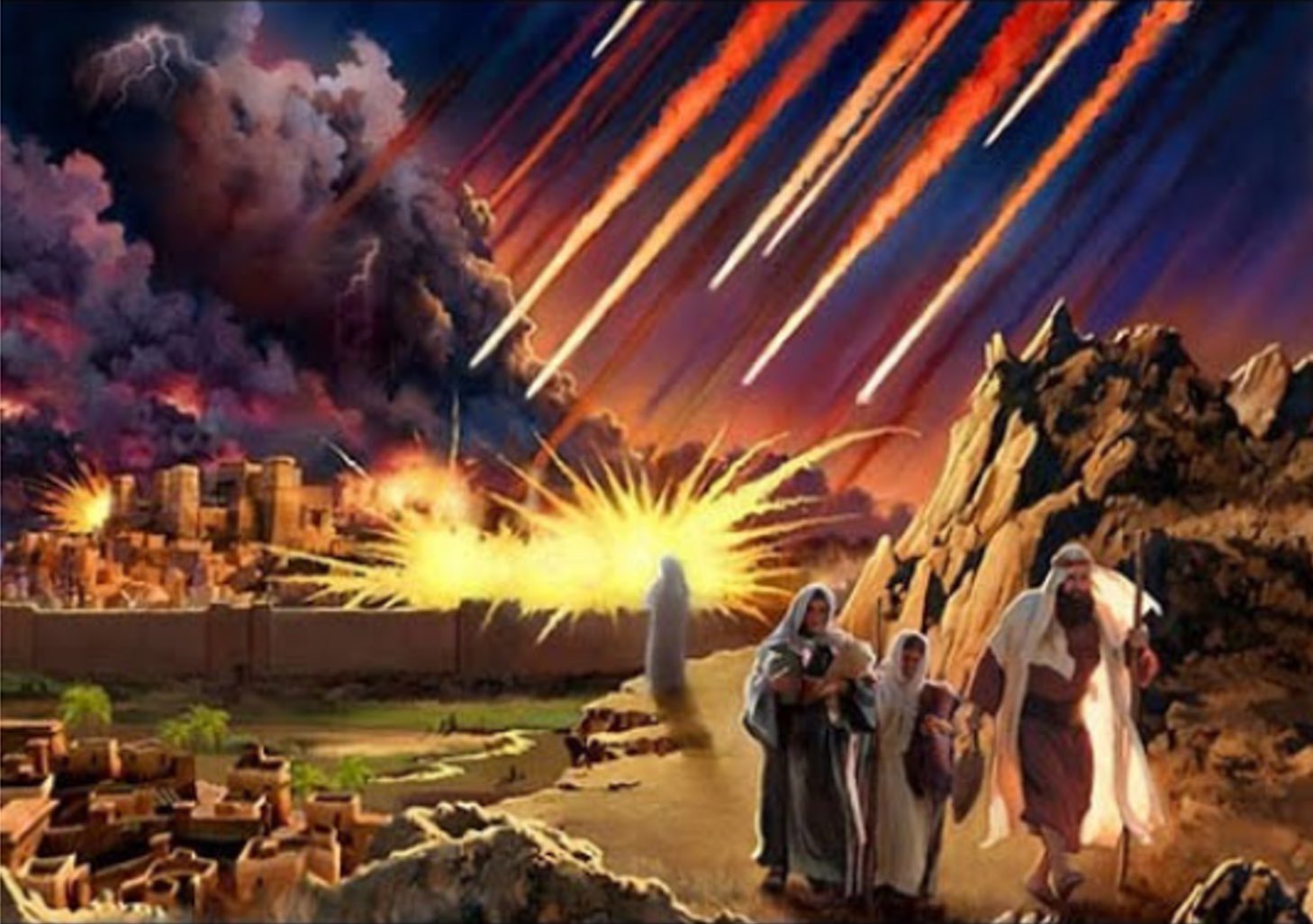
— A Biblical Reflection
As Bible-believing Christians, we are called not to conform to the pattern of this world, but to be transformed by the renewing of our minds (Romans 12:2). In recent times, movements and months have arisen in society to commemorate and normalize lifestyles and ideologies that stand in contradiction to the Word of God. If ever there were a time for “Sodom and Gomorrah Awareness,” it is now—not to celebrate, but to warn and call to repentance, as the Scriptures solemnly declare.
The Biblical Record: What Happened to Sodom and Gomorrah?
Sodom and Gomorrah were cities marked by great wickedness. Their judgment by God stands as one of the clearest biblical warnings against rebellion and moral corruption.
“But the men of Sodom were wicked and sinners before the LORD exceedingly.”
— Genesis 13:13
Their sin was so grievous that God Himself came down to verify the outcry against them (Genesis 18:20-21). The final judgment is recorded in Genesis 19, where fire and brimstone rained from heaven:
“Then the LORD rained upon Sodom and upon Gomorrah brimstone and fire from the LORD out of heaven;
And he overthrew those cities, and all the plain, and all the inhabitants of the cities…”
— Genesis 19:24-25
This destruction was not arbitrary. It was the righteous judgment of a holy God against persistent sin, including sexual perversion, pride, violence, and neglect of the poor.
“Behold, this was the iniquity of thy sister Sodom, pride, fulness of bread, and abundance of idleness… neither did she strengthen the hand of the poor and needy.
And they were haughty, and committed abomination before me: therefore I took them away as I saw good.”
— Ezekiel 16:49-50
The New Testament Reminder: A Warning to All Generations
The New Testament does not treat Sodom as mere history—it uses the example as a warning for future generations. Jesus Himself referred to Sodom when warning cities that rejected His gospel:
“Verily I say unto you, It shall be more tolerable for the land of Sodom and Gomorrha in the day of judgment, than for that city.”
— Matthew 10:15
Peter reminds us that God’s judgment is not idle:
“And turning the cities of Sodom and Gomorrha into ashes condemned them with an overthrow, making them an ensample unto those that after should live ungodly;”
— 2 Peter 2:6
And Jude speaks directly to the unnatural lusts and eternal consequence of their rebellion:
“Even as Sodom and Gomorrha, and the cities about them in like manner, giving themselves over to fornication, and going after strange flesh, are set forth for an example, suffering the vengeance of eternal fire.”
— Jude 1:7
What Should We Be Aware Of?
If we are to observe a “Sodom and Gomorrah Awareness Month,” let it be with biblical eyes:
- Awareness that sin, especially unrepentant sin, leads to judgment.
- Awareness that God is patient, but His judgment is certain.
- Awareness that Jesus Christ came to save sinners, and that there is mercy for those who repent (Luke 5:32, Acts 3:19).
Let the Church speak not with pride or hatred, but with truth and love—calling people out of darkness into the marvelous light of Christ (1 Peter 2:9).
Final Exhortation
“Remember Lot’s wife.”
— Luke 17:32
She looked back at what God was judging. Let us not do the same. Let us flee the sin that God condemns, and cling to the Saviour who redeems.
“But ye, beloved, building up yourselves on your most holy faith, praying in the Holy Ghost,
Keep yourselves in the love of God, looking for the mercy of our Lord Jesus Christ unto eternal life.
And of some have compassion, making a difference:
And others save with fear, pulling them out of the fire; hating even the garment spotted by the flesh.”
— Jude 1:20–23
Let Sodom and Gomorrah Awareness not be a celebration of what God destroyed, but a sobering reminder of His justice—and His offer of grace.
Posted in Religion by PE Van Blerk with comments disabled.
True Faith or False Religion?
Opening:
False religion is born when men replace God’s truth with human tradition, form without faith, and rituals without repentance. But true faith is born from a heart transformed by the gospel of Jesus Christ—submitting to His lordship, seeking His will, and living in obedience to His Word. It manifests in holiness, love, and biblically grounded practices such as evangelism, fellowship, communion, and care for the vulnerable.
Many people are religious—yet the Bible warns that not all religion pleases God. In fact, Jesus rebuked the religious elite of His day for honoring God outwardly while their hearts were far from Him:
“This people honoureth me with their lips, but their heart is far from me. Howbeit in vain do they worship me, teaching for doctrines the commandments of men.”
— Mark 7:6–7 (cf. Isaiah 29:13)
1. False Religion: Belief Without Truth
Belief, in itself, is not virtuous—it depends on what or whom we believe in. False religion arises when belief is placed in anything other than the true and living God as revealed in Scripture.
“Professing themselves to be wise, they became fools… Who changed the truth of God into a lie, and worshipped and served the creature more than the Creator.”
— Romans 1:22, 25
Even demons believe in God’s existence (James 2:19), but that belief does not save—they do not trust, love, or obey Him.
False religion often has the appearance of wisdom, but it lacks power:
“Which things have indeed a shew of wisdom in will worship, and humility… but are of no value against the indulgence of the flesh.”
— Colossians 2:23
2. True Faith: Trust in Jesus as Lord and Saviour
Biblical faith is not mere belief—it is saving trust in Jesus Christ: crucified, risen, and exalted.
“That if thou shalt confess with thy mouth the Lord Jesus, and shalt believe in thine heart that God hath raised him from the dead, thou shalt be saved.”
— Romans 10:9
“Neither is there salvation in any other: for there is none other name under heaven… whereby we must be saved.”
— Acts 4:12
This faith is not a vague spirituality. It is faith in the historical, risen Jesus—the only way to the Father (John 14:6).
3. Faith That Transforms: A Life of Obedience
True faith leads to repentance and a changed life. It produces obedience, not perfection—but a growing desire to walk in God’s ways.
“If ye love me, keep my commandments.”
— John 14:15
“And hereby we do know that we know him, if we keep his commandments.”
— 1 John 2:3
Faith that does not produce action is dead:
“Even so faith, if it hath not works, is dead, being alone.”
— James 2:17
4. The Fruit of Faith: Biblical Practices
When Christ reigns in the heart, a person naturally desires to obey His Word and participate in the life and mission of the Church. These biblical practices are not means of salvation, but evidences of salvation.
a. Evangelism – The Great Commission
“Go ye therefore, and teach all nations… teaching them to observe all things whatsoever I have commanded you.”
— Matthew 28:19–20
b. Fellowship – Gathering with the Saints
“Not forsaking the assembling of ourselves together, as the manner of some is…”
— Hebrews 10:25
c. Communion – Remembering the Lord’s Death
“This do in remembrance of me… For as often as ye eat this bread, and drink this cup, ye do shew the Lord’s death till he come.”
— 1 Corinthians 11:24–26
d. True Religion – Love for the Vulnerable
“Pure religion and undefiled before God and the Father is this, To visit the fatherless and widows in their affliction, and to keep himself unspotted from the world.”
— James 1:27
5. Beware of Religion Without Christ
Just as in Jesus’ day, many still follow “religious tradition” while ignoring God’s Word. Jesus warned:
“Full well ye reject the commandment of God, that ye may keep your own tradition.”
— Mark 7:9
Religion is dangerous when it replaces Christ with customs, and substitutes outward show for inward change.
Conclusion: Examine Your Faith
Not all who appear religious are right with God. Jesus said:
“Not every one that saith unto me, Lord, Lord, shall enter into the kingdom of heaven… Many will say to me in that day, Lord, Lord… and then will I profess unto them, I never knew you…”
— Matthew 7:21–23
True faith begins with the heart—broken over sin, believing the gospel, and surrendering to Christ. It continues with a life that seeks God’s glory, walks in obedience, and reflects His love.
“Examine yourselves, whether ye be in the faith.”
— 2 Corinthians 13:5
Posted in Uncategorized by PE Van Blerk with comments disabled.
One Gospel, One Body: How the Bible Calls Us to Truth, Humility, and Unity
Across centuries, nations, and cultures, the message of Jesus Christ has changed countless lives. And yet, even among those who claim His name, there is division—denominations, theological camps, and at times, open hostility between believers. Why is this so? The Bible gives us an honest answer: human nature. Even after receiving the truth of the Gospel, we still wrestle with pride, self-righteousness, greed, and the desire to be “right” more than we desire to love one another. And this matters deeply—because how believers treat one another can either lead people toward Jesus or drive them away.📖 The Biblical Gospel: Not Ours to Redefine
The Gospel is the power of God unto salvation to everyone that believes (Romans 1:16). It is not a message we invented, and it is not one we are free to reshape. Paul writes clearly in Galatians 1:8 (KJV):“But though we, or an angel from heaven, preach any other gospel unto you than that which we have preached unto you, let him be accursed.”This Gospel tells us the truth we don’t want to hear: that all have sinned (Romans 3:23), that our righteousness is as filthy rags (Isaiah 64:6), and that no one is good (Romans 3:10). It calls us not just to believe in God—but to repent, trust Christ alone, and walk in newness of life (Mark 1:15, Romans 6:4). True salvation humbles us. It removes boasting (Ephesians 2:8–9) and unites us into one body in Christ—regardless of nationality, culture, or past (Galatians 3:28).
🧬 Human Nature: Self-Righteousness, Greed, and Division
Even within the Church, we are not immune to the pull of the flesh. Paul admitted in Romans 7:18:“For I know that in me (that is, in my flesh,) dwelleth no good thing…”Believers still battle the old nature. We see it in subtle ways: arguing over doctrine not to build up but to win, elevating our group or denomination as more “biblical,” or using theology to divide rather than edify. Consider how easily pride shows up in our approach to Calvinism vs. Arminianism. Each side can be tempted to exalt its system above the cross of Christ itself. We must ask: Are we defending truth—or defending our own importance? This is not new. In Philippians 1:15–17, Paul acknowledged that some preach Christ “even of envy and strife,” seeking their own gain. Yet Paul rejoiced that Christ was still preached. His focus remained on the Gospel, not the egos involved.
🤝 Biblical Disagreements: Even the Apostles Had Them
Scripture does not hide the reality of disagreement—even among the most faithful. In Acts 15:39, Paul and Barnabas had such a sharp contention over John Mark that they parted ways. And in Galatians 2:11, Paul publicly rebuked Peter for hypocrisy. But what mattered was not the dispute—it was the heart. These men were servants of Christ, not slaves to pride. They did not let disagreement lead to bitterness, gossip, or division of the body. When correction came, it was for the sake of truth and love.🕊 How Should We Treat One Another? Biblical Guidelines
In a divided world, the Church must be different. Scripture is clear about how believers should engage—even in disagreement:- With humility: “Let nothing be done through strife or vainglory; but in lowliness of mind let each esteem other better than themselves.” (Philippians 2:3)
- With patience and gentleness: “The servant of the Lord must not strive; but be gentle unto all men… in meekness instructing those that oppose themselves.” (2 Timothy 2:24–25)
- Speaking truth in love: “But speaking the truth in love, may grow up into him in all things.” (Ephesians 4:15)
- Avoiding foolish debates: “But foolish and unlearned questions avoid, knowing that they do gender strifes.” (2 Timothy 2:23)
⛪ Denominations and the Body of Christ
It is true: we have many denominations. Some of this comes from sincere convictions about Scripture. But often, division reflects pride more than principle. The Bible teaches that there is “one body, and one Spirit… one Lord, one faith, one baptism” (Ephesians 4:4–5). Though we may differ in practice or emphasis, those truly in Christ are part of the same Church. As Paul said in 1 Corinthians 12:25:“That there should be no schism in the body; but that the members should have the same care one for another.”We must guard against elevating our tradition above the Gospel. Christ is not divided—neither should His people be.
🔥 A Caution Against a Comfortable Gospel
While our focus is not on trends, it is worth warning: many today follow a version of Jesus who makes no demands, avoids judgment, and fits perfectly into modern culture. This “Jesus” never speaks of hell, never rebukes sin, and never calls for surrender. But the Jesus of Scripture said:“Repent: for the kingdom of heaven is at hand.” — Matthew 4:17 “Ye shall be hated of all men for my name’s sake…” — Matthew 10:22 “If any man will come after me, let him deny himself, and take up his cross…” — Matthew 16:24We must test every teaching, every spirit, and every “gospel” against the unchanging Word of God (1 John 4:1; Galatians 1:8–9).
💡 Final Thoughts: Let Us Be Known by Christ
The Gospel is true. Christ is Lord. We are saved by grace. And all who are in Christ are one. So let us be marked not by pride, but by love. Not by factions, but by faith. Let the world see not our debates—but our Savior.“By this shall all men know that ye are my disciples, if ye have love one to another.” — John 13:35And when we do disagree—as we surely will—let it be with humility, clarity, and grace. Let it point to Christ, not to us. Because in the end, it’s not about being right. It’s about being faithful.
Posted in Religion by PE Van Blerk with comments disabled.
Come Out and Be Separate: What God Really Requires
In a world saturated with compromise and sugar-coated religion, it’s time to return to the only authority that matters—God’s Word. Not opinions. Not feelings. Not traditions. The Bible alone declares what God requires from those who say they belong to Him.
You Cannot Serve God and the World
“No man can serve two masters: for either he will hate the one, and love the other; or else he will hold to the one, and despise the other. Ye cannot serve God and mammon.”
— Matthew 6:24, KJV
There is no such thing as a divided heart in the Kingdom of God. You either belong fully to Christ, or you are still bound to the world. Serving two masters is not possible in the eyes of God.
God Demands Separation from Sin and Compromise
“Be ye not unequally yoked together with unbelievers: for what fellowship hath righteousness with unrighteousness? and what communion hath light with darkness?”
“Wherefore come out from among them, and be ye separate, saith the Lord, and touch not the unclean thing; and I will receive you.”
— 2 Corinthians 6:14, 17, KJV
The Word of God commands believers to separate from sin, unbelief, and anything that defiles. That includes those within the church who profess Christ yet continue in sin.
Repentance Is Not a Feeling—It’s a Turning
“Repent ye therefore, and be converted, that your sins may be blotted out…”
— Acts 3:19, KJV“Repent, and turn yourselves from all your transgressions; so iniquity shall not be your ruin.”
— Ezekiel 18:30, KJV
True repentance isn’t just saying “sorry”—it’s a radical turning away from sin. Without it, there is no forgiveness.
Even Family Will Divide Over the Truth
“Think not that I am come to send peace on earth: I came not to send peace, but a sword.”
“And a man’s foes shall be they of his own household.”
— Matthew 10:34, 36, KJV
Christ Himself warned that His truth would divide even families. If you’re holding on to relationships at the cost of holiness, you’re choosing man over God.
Human Understanding Will Deceive You
“There is a way which seemeth right unto a man, but the end thereof are the ways of death.”
— Proverbs 14:12, KJV
God is not interested in what seems right to us. His Word is the only path that leads to life. Any deviation leads to destruction—even if it feels right or is popular.
You Must Be Holy
“Because it is written, Be ye holy; for I am holy.”
— 1 Peter 1:16, KJV
Holiness is not optional. It’s the standard of every true believer. Not perfection, but a heart fully set apart unto God, constantly turning from sin and walking in the Spirit.
Your Soul Is at Stake
“For what shall it profit a man, if he shall gain the whole world, and lose his own soul?”
— Mark 8:36, KJV
Nothing is more valuable than your soul. No friendship. No career. No earthly gain. If you lose your soul, you lose everything.
Final Word: Choose Whom You Will Serve
“And if it seem evil unto you to serve the LORD, choose you this day whom ye will serve… but as for me and my house, we will serve the LORD.”
— Joshua 24:15, KJV
This is not the hour to waver. The time for lukewarm religion is over. God is holy. He is just. He is not mocked. You must choose: serve Him fully, or keep serving the world and face the consequences.
Let this not be a message you merely read—let it be the call to action for your life.
“He that hath ears to hear, let him hear.”
— Matthew 11:15, KJV
Posted in Religion by PE Van Blerk with comments disabled.
The Danger of Systems — The Call to Christ Alone
In every generation, believers have wrestled with understanding salvation. Some gather under names like Calvinism or Arminianism — systems built to explain the mysteries of God’s work.
But we must be warned: systems are not the Savior.
“For other foundation can no man lay than that is laid, which is Jesus Christ.” (1 Corinthians 3:11)
Systems can be helpful at times. They can highlight truths.
But when we cling to them instead of clinging to Christ, they become dangerous distractions.
They are man’s ideas trying to map out God’s infinite ways.
“O the depth of the riches both of the wisdom and knowledge of God! how unsearchable are his judgments, and his ways past finding out!” (Romans 11:33)
God’s plan was never about labels.
It was always about new life in Christ — a life birthed by the Spirit, not built by intellectual agreement with a system.
Jesus said plainly:
“Ye must be born again.” (John 3:7)
“I am the way, the truth, and the life: no man cometh unto the Father, but by me.” (John 14:6)
Not Calvin.
Not Arminius.
Not a denomination.
Christ alone.
Salvation is a gift, not an argument to be won:
“For by grace are ye saved through faith; and that not of yourselves: it is the gift of God:
Not of works, lest any man should boast.” (Ephesians 2:8-9)
The Holy Spirit was sent to guide us daily — into all truth, not into allegiance to theological camps:
“Howbeit when he, the Spirit of truth, is come, he will guide you into all truth…” (John 16:13)
Many will one day say, “Lord, Lord,” but Christ will answer, “I never knew you.” (Matthew 7:21-23)
Why? Because salvation is not about knowing a system — it is about knowing Jesus personally, being born again, and walking with Him by the Spirit.
Systems are tools at best, distractions at worst.
Jesus is the only foundation. Faith in Him alone saves.
So believer, today:
- Turn your heart fully to Christ.
- Let the Holy Spirit guide you daily.
- Refuse to be chained by labels.
- Live in the freedom and life of Jesus alone.
“If the Son therefore shall make you free, ye shall be free indeed.” (John 8:36)
Posted in Religion by PE Van Blerk with comments disabled.
The Gospel Thread in Eight Verses
Gen 1:1 – Jn 1:1-3, 14 – Jn 17:5 – Jn 3:3 – Ezek 36:26-27 – Jn 14:6 – Gal 3:29 – Matt 7:21-23
Have you ever wondered what the Bible is really about? It’s not just a book of stories or rules—it’s the unfolding revelation of God’s plan to create, redeem, and restore. The following eight verses trace a powerful path from creation, through Christ, to our new birth and eternal calling. Let’s walk through them.
Gen 1:1 — The Beginning of Everything
“In the beginning God created the heaven and the earth.”
This is where it all starts. God is the eternal Creator, the One who brought everything into being. Before there was time, space, or matter—there was God. This verse lays the foundation: God is the source of life and the Lord over all creation.
Jn 1:1-3, 14 — The Word Who Was and Is God
“In the beginning was the Word, and the Word was with God, and the Word was God… All things were made by him… And the Word was made flesh, and dwelt among us…”
John brings us back to Genesis—but this time he reveals a mystery: The Word, who created all things, is Jesus Christ. He is eternal, divine, and He became flesh to dwell among us. Jesus is not just a prophet or a teacher—He is God revealed in human form.
Jn 17:5 — The Preexistent Glory of Christ
“And now, O Father, glorify thou me… with the glory which I had with thee before the world was.”
In His prayer before the cross, Jesus reveals a profound truth: He shared glory with the Father before creation ever began. He didn’t begin at Bethlehem—He is eternal, equal with the Father, and willingly stepped into time and flesh to accomplish salvation.
Jn 3:3 — The Need for New Birth
“Except a man be born again, he cannot see the kingdom of God.”
If Jesus is God and Creator, and He came to save, then how do we enter His kingdom? Jesus gives the answer plainly: You must be born again. This is not a physical birth, but a spiritual rebirth. No one enters God’s kingdom through religion, ritual, or heritage—only through a new heart and a new Spirit.
Ezek 36:26-27 — God’s Promise to Transform the Heart
“A new heart also will I give you, and a new spirit will I put within you…”
This Old Testament promise echoes and explains John 3:3. The new birth is not something we earn or achieve—it’s something God does within us. He gives us a new heart, removes our stubbornness, and places His Spirit within us, enabling us to love and obey Him. This is the miracle of regeneration.
Jn 14:6 — The Only Way
“I am the way, the truth, and the life: no man cometh unto the Father, but by me.”
Jesus makes an exclusive claim—He is the only way to the Father. There is no other path, no alternate door. Not good works, not other religions, not self-reformation—only Jesus. The new birth comes through faith in Him alone.
Gal 3:29 — The True Heirs of God’s Promise
“If ye be Christ’s, then are ye Abraham’s seed, and heirs according to the promise.”
Many people think being part of God’s family is about bloodline or background. But Paul says if you belong to Christ, then you are Abraham’s offspring—heirs of the promise. This includes people from every nation, tribe, and tongue. Through faith, we are grafted into the family of God and inherit the blessings of His covenant.
Matt 7:21-23 — The Sobering Warning
“Not every one that saith unto me, Lord, Lord, shall enter into the kingdom of heaven…”
Jesus ends the Sermon on the Mount with a solemn warning. Religious words and works do not guarantee salvation. Many will claim His name and point to their deeds, but He will say, “I never knew you.” What matters is a real relationship with Christ, grounded in obedience and Spirit-led transformation.
Final Reflection
These verses form a complete picture:
- God created all things.
- Jesus, the eternal Word, is God and Creator.
- He became flesh to bring us life.
- We must be born again—not by works but by the Spirit.
- This new life comes only through faith in Jesus.
- Those who are Christ’s are heirs of God’s promise.
- But only those truly known by Him will enter His kingdom.
This is not just a theological outline—it’s a call to examine our hearts. Have you been born again by the Spirit of God? Do you know Jesus—not just in name, but in truth?
Let the Word search you. Let the Spirit renew you. And let Jesus be your way, your truth, and your life. Feel free to copy and share this blog post anywhere you’d like to encourage others with the truth of the gospel.
Posted in Religion by PE Van Blerk with comments disabled.
You Are the Church — Or You’re Not
I Need to Get Back to Church…” – But What Do We Really Mean?
“I haven’t been to church in a while.”
“I’m trying to go more regularly.”
“I used to go, but I fell off.”
“Which church do you belong to?”
These are the kinds of things we often hear. They sound familiar. Comfortable. Even spiritual.
But beneath the surface, these statements reveal something deeper — and far more concerning:
We’ve reduced the Church to a building, a program, a place we “go to” or “leave” — not what God actually says it is.
In this post, we’re not just rethinking our language.
We’re returning to Scripture to rediscover what the Church truly is — and who we truly are.
The Church Is Not a Building — It’s the People of God
Let’s make one thing absolutely clear:
The Church is not a building. It never has been. It never will be.
Nowhere in the Bible does God define the Church as a structure made of bricks and glass.
Yet today, people talk about “church” the same way they talk about gyms or grocery stores:
A place you go, a place you leave, a service you attend, a building you walk into once a week.
But that is not Biblical.
What Is the Church, According to the Bible?
1. The Church is the Body of Christ — Made of People, Not Walls
“Now you are the body of Christ, and individually members of it.”
— 1 Corinthians 12:27
The Church is made up of born-again believers — men, women, and children who have been saved by grace through faith in Jesus Christ (Ephesians 2:8-9).
It is not a location, but a living, breathing body of people across nations, languages, and generations — all united in one Spirit (1 Corinthians 12:13).
2. The Church is the Household of God — Not a Denomination, Not a Brand
“So then you are no longer strangers and aliens, but you are fellow citizens with the saints and members of the household of God.”
— Ephesians 2:19
It’s not about which “church building” you attend, what style of worship you prefer, or what your church logo looks like.
The true Church is God’s family — and only those adopted into that family by faith in Christ are part of it (John 1:12-13).
You don’t “go to church” — you are the Church, if you belong to Jesus.
3. The Church is the Temple of the Holy Spirit — Not Made by Human Hands
“Do you not know that you are God’s temple and that God’s Spirit dwells in you?”
— 1 Corinthians 3:16
The New Testament never commands us to build a “church building.”
Instead, God builds His Church by filling people with His Spirit.
In Acts 2:1-47, the Church was born — not in a cathedral, but in a house, where believers were filled with the Holy Spirit and went out to proclaim the gospel.
So Why Do We Gather?
If the Church is not a building — then why do we meet together?
Because God commands it.
“And let us consider how to stir up one another to love and good works, not neglecting to meet together, as is the habit of some, but encouraging one another…”
— Hebrews 10:24–25
Gathering is not about attendance.
It’s not about checking a religious box.
It’s about mutual encouragement, teaching, correction, prayer, worship, the Lord’s Supper, and building one another up in the faith (Acts 2:42, Colossians 3:16, 1 Thessalonians 5:11).
We gather because we are one body — and the body cannot function in isolation (1 Corinthians 12:14–20).
Matthew 18:18-20
‘Verily I say unto you, Whatsoever ye shall bind on earth shall be bound in heaven: and whatsoever ye shall loose on earth shall be loosed in heaven. Again I say unto you, That if two of you shall agree on earth as touching any thing that they shall ask, it shall be done for them of my Father which is in heaven. For where two or three are gathered together in my name, there am I in the midst of them. ‘
A Serious Word About Fellowship and the Breaking of Bread
True fellowship — the kind commanded by God — is holy.
It is the shared life of the redeemed, those who have been born again by the Spirit of God (John 3:3).
When the Church gathers, we pray, we worship, we build one another up — and we partake of sacred ordinances like the breaking of bread (Communion) and Baptism.
But God gives a fearful warning:
This gathering, and the sharing in the Lord’s Supper, is only for the saved — and only for those who walk in repentance.
Paul wrote by the Holy Spirit:
“Wherefore whosoever shall eat this bread, and drink this cup of the Lord, unworthily, shall be guilty of the body and blood of the Lord.
But let a man examine himself, and so let him eat of that bread, and drink of that cup.
For he that eateth and drinketh unworthily, eateth and drinketh damnation to himself, not discerning the Lord’s body.”
(1 Corinthians 11:27-29, KJV)
To take part in holy fellowship without being in Christ, or while living in willful sin, brings God’s judgment — not His blessing.
This is why even among true believers, the Bible commands that if a brother or sister persists in sin and refuses to repent, the Church must cast them out from fellowship:
“But now I have written unto you not to keep company, if any man that is called a brother be a fornicator, or covetous, or an idolater, or a railer, or a drunkard, or an extortioner; with such an one no not to eat.”
(1 Corinthians 5:11, KJV)
And again:
“Them that sin rebuke before all, that others also may fear.”
(1 Timothy 5:20, KJV)
This is not cruelty — it is obedience.
It is a call to holiness, protecting the purity of Christ’s body and calling sinners to true repentance.
Fellowship is not a casual gathering.
It is the holy communion of the saints — those who have received a new heart and a new spirit through faith in Jesus Christ:
“A new heart also will I give you, and a new spirit will I put within you…”
(Ezekiel 36:26, KJV)
Visitors and unbelievers are welcome to observe and hear the Word of God — but they must not take part in the sacred breaking of bread until they too have been born again by faith.
The Church is the gathering of the redeemed.
Its fellowship is sacred.
Its holiness must not be profaned.
“Be ye holy; for I am holy.”
(1 Peter 1:16, KJV)
Let This Sink In
If you think “going to church” makes you a Christian,
then you’ve misunderstood the gospel.
You can sit in a church building every Sunday and still be spiritually dead.
You can never step into a building and yet be fully alive in Christ — if you belong to Him.
The Church is not a weekend event.
It is the redeemed people of God, living in relationship with Christ and each other, carrying His mission into the world.
Final Words
We must stop using worldly language that confuses buildings with believers.
The Church is not a place you go.
It’s who you are — if you are in Christ.
So the next time you hear someone say, “I need to get back to church…”,
ask them this:
“Do you know what the Church truly is?”
Because that question changes everything.
Posted in Religion by PE Van Blerk with comments disabled.
Modern Jesus vs. Biblical Jesus
| Modern Jesus | Biblical Jesus |
|---|---|
| Preaches only on love – Focuses solely on love and acceptance, avoiding topics like sin, judgment, and righteousness. | Preaches God’s righteousness – Teaches love alongside holiness, repentance, and righteousness. (Leviticus 19:17-18, Matthew 5:48, Mark 1:15, John 8:11, John 14:15, Romans 13:10, 1 John 5:2-3, 2 John 1:6, 1 Corinthians 13:6, Ephesians 4:15) |
| Gives you health & wealth – Promises personal success, prosperity, and a comfortable life. | Gives salvation, hope, peace & joy – Offers eternal life, spiritual peace, and joy despite earthly struggles. (Matthew 6:19-21, Luke 19:10, John 3:17, John 14:3, Matthew 12:21, John 14:27, John 16:33, John 15:11, Luke 10:21) |
| Never says anything negative – Avoids confrontation, correction, or discussing sin. | Warns of sin, judgment & hell – Speaks openly about sin, judgment, and the reality of hell. (Matthew 7:13-14, John 8:24, Mark 2:17, John 5:22, Matthew 12:36, Matthew 10:28, Mark 9:43-48) |
| Loved & accepted by the world – Fits into secular culture, embraced without challenge. | Hated & despised by the world – Rejected by many for His truth and teachings. (John 15:18-19, Isaiah 53:3, John 7:7) |
| Serves your will, not God’s will – Prioritizes personal desires and affirmations. | Exalts God the Father’s will – Submits to and fulfills the Father’s will. (John 4:34, John 6:38, Matthew 26:39, Luke 22:42) |
| Hates to offend you or others – Avoids saying anything that might upset or challenge people. | Offends the world with the truth – Speaks the truth even when it offends or convicts people. (Matthew 23:13-15, John 2:15-16, Matthew 13:57, John 6:61, John 8:40, John 14:6, John 3:19-20, John 8:9) |
Conclusion
The contrast between the “Modern Jesus” and the “Biblical Jesus” highlights the shift in contemporary Christianity. The modern version often emphasizes comfort, prosperity, and personal desires, while the Biblical Jesus calls for repentance, sacrifice, and commitment to God’s will. The true message of Christ includes hope and peace, but also the reality of sin, judgment, and the necessity of transformation.
Posted in Religion by PE Van Blerk with comments disabled.
Only Jesus is LORD God and Saviour
The Bible teaches that Jesus is the fulfillment of God’s promises, the only way to salvation, and the central figure in God’s plan of redemption. All aspects of Scripture point to Jesus and His role in establishing God’s kingdom and providing salvation for humanity, including the promise made to Abraham’s seed, which encompasses all who believe in Christ.
You cannot read the Bible without acknowledging God for who He is.
You cannot read and understand the Bible without Prayer and Faith.
You cannot read the Bible and neglect Jesus (referred to as LORD, Jehovah, Yahweh) as the central figure of all its contents.
Always ask yourself: What does this passage say or teach about Jesus and His message?
Romans 7:22-25
‘For I delight in the law of God after the inward man: but I see another law in my members, warring against the law of my mind, and bringing me into captivity to the law of sin which is in my members. O wretched man that I am! who shall deliver me from the body of this death? I thank God through Jesus Christ our Lord. So then with the mind I myself serve the law of God; but with the flesh the law of sin.’
The Bible as True and Inspired: The Bible is considered true and inspired by God. It is written by holy men of God who were moved by the Holy Spirit (2 Timothy 3:16-17; 2 Peter 1:19-21; Luke 21:15). Prophets like Jeremiah, Moses, Isaiah and many more like Micah were given divine words to speak (Jeremiah 1:9; Exodus 4:12-13; Isaiah 50:4; Micah 5:2-4).
Jesus is God: Jesus is identified as God from the beginning, the first and the last, God Almighty, with various names such as LORD, Jehovah, Yahweh and The Word. He is the Creator of all things and the only way to salvation (John 1:1-5, 14; Colossians 1:15-20; Hebrews 1:1-3; Genesis 17:1; Exodus 6:3; Isaiah 44:6; Revelation 1:8; Revelation 11:17; Isaiah 44:6; Acts 4:12).
Jesus’ Covenant with Abraham’s Descendants: Jesus, identified as the LORD, appeared to Abraham and established a covenant with him and his descendants through Isaac and Jacob (Genesis 18:1-8; Exodus 6:2-3). The promise made to Abraham’s children extends to all who believe in Jesus, as seen in Galatians 3:28-29; Ephesians 3:6; Romans 9:7-8.
Galatians 3:28-29
” 28 There is neither Jew nor Greek, there is neither bond nor free, there is neither male nor female: for ye are all one in Christ Jesus. 29 If you belong to Christ, then you are Abraham’s seed, and heirs according to the promise.”
Ephesians 3:6
6 That the Gentiles should be fellowheirs, and of the same body, and partakers of his promise in Christ by the gospel:
Romans 9:7-8
7 Neither, because they are the seed of Abraham, are they all children: but, In Isaac shall thy seed be called. 8 That is, They which are the children of the flesh, these are not the children of God: but the children of the promise are counted for the seed.
These verses emphasises that those who belong to Christ (through faith in Him) are considered Abraham’s seed and heirs according to the promise made to Abraham. This means that the promise of blessings extends beyond physical descendants to include all who have faith in Jesus Christ.
Remind yourselves when Jesus spoke to the unbelieving Jews or when the prophesy warns us about people that say they are Jews but are not.
John 8:39-47
39 They answered and said unto him, Abraham is our father. Jesus saith unto them, If ye were Abraham’s children, ye would do the works of Abraham. 40 But now ye seek to kill me, a man that hath told you the truth, which I have heard of God: this did not Abraham. 41 Ye do the deeds of your father. Then said they to him, We be not born of fornication; we have one Father, even God. 42 Jesus said unto them, If God were your Father, ye would love me: for I proceeded forth and came from God; neither came I of myself, but he sent me. 43 Why do ye not understand my speech? even because ye cannot hear my word. 44 Ye are of your father the devil, and the lusts of your father ye will do. He was a murderer from the beginning, and abode not in the truth, because there is no truth in him. When he speaketh a lie, he speaketh of his own: for he is a liar, and the father of it. 45 And because I tell you the truth, ye believe me not. 46 Which of you convinceth me of sin? And if I say the truth, why do ye not believe me? 47 He that is of God heareth God’s words: ye therefore hear them not, because ye are not of God.
Revelation 2:9
9 I know thy works, and tribulation, and poverty, (but thou art rich) and I know the blasphemy of them which say they are Jews, and are not, but are the synagogue of Satan.
Revelation 3:9
9 Behold, I will make them of the synagogue of Satan, which say they are Jews, and are not, but do lie; behold, I will make them to come and worship before thy feet, and to know that I have loved thee.
New Covenant and Salvation through Jesus: Jesus unveiled the new covenant through His sacrifice, fulfilling the old covenant and providing salvation for all who believe in Him. The law served as a tutor leading to faith in Jesus, who is the only way to salvation (Jeremiah 31:31-34; Hebrews 9:15; Matthew 26:28; John 14:6; Acts 4:12; Philippians 2:5-11; Romans 10:9; Ephesians 2:8-9; 1 John 5:11-12; Galatians 3:24-25; Romans 10:4; Romans 7:6).
Future Kingdom: Believers now await a new kingdom, where God Himself will rule. Jesus will reign until all enemies are put under His feet, and then He will deliver the kingdom to God the Father (1 Corinthians 15:22-28; Luke 22:18; Matthew 25:34; Revelation 11:15; Revelation 21:1-4).
The essence of the biblical teachings emphasizes that there is no distinct path to God’s final plan based on one’s ethnicity or heritage, as reiterated throughout the Scriptures. The focal point remains Jesus Christ, who embodies the fulfillment of God’s promises and serves as the singular means of salvation for all humanity. As elucidated in Galatians 3:28-29 and other passages, those who belong to Christ are considered Abraham’s seed and heirs to the promise, irrespective of their background. The covenant established with Abraham’s descendants extends beyond physical lineage to encompass all who believe in Jesus. Hence, the emphasis shifts from ethnic identity to faith in Christ as the defining factor. Jesus’ discourse with unbelieving Jews, as depicted in John 8:39-47, underscores the importance of genuine faith over mere lineage. Furthermore, Revelation warns against those who falsely claim to be of Jewish descent, emphasizing the primacy of true faith in Christ. Ultimately, salvation is through Jesus alone, as He ushered in the new covenant, fulfilling the law and providing salvation for believers. Thus, the focus should never be on ethnic distinctions but on embracing Jesus as the central figure and sole means of salvation in God’s redemptive plan.
The anticipation of Jesus’ return carries profound implications, as it signifies the culmination of God’s plan for redemption and the final judgment of humanity. This event will not herald Jesus’ arrival to establish an earthly kingdom but will instead unveil the full wrath of God upon the world. As stated in Revelation 19:11-16, Jesus will return as a conquering king, leading the armies of heaven, and executing judgment with righteousness. The imagery of Jesus coming on a white horse with eyes like flames of fire illustrates His authority and sovereignty over all creation. In Matthew 24:29-31, Jesus Himself foretold of His return with power and great glory, accompanied by angels who will gather His elect from the ends of the earth. This moment signifies the ultimate separation between the righteous and the unrighteous, as described in Matthew 25:31-46, where Jesus will judge all nations, rewarding the righteous with eternal life and condemning the wicked to everlasting punishment. Therefore, the prospect of Jesus’ second coming carries a weighty reminder of the finality of judgment and the necessity of preparedness for His imminent return.
1. Is ethnic Israel still God’s chosen people today?
Answer: No. The New Testament redefines “true Israel” as those who follow Christ by faith, not by ethnicity (Rom. 2:28–29; Gal. 3:7, 29).
- Romans 9:6–8 – Not all ethnic Israelites are true Israel; only the “children of promise” (in Christ) are heirs.
- Galatians 6:16 – The “Israel of God” refers to the Church, the redeemed in Christ.
Gospel Alignment: Salvation is through faith in Jesus, not ancestry (John 1:12–13; 3:16).
2. Did Jesus abolish God’s promises to Israel?
Answer: No—He fulfilled them (Matt. 5:17). The Old Covenant’s earthly promises (land, temple) pointed to Christ’s eternal Kingdom (Heb. 8:13; 10:1).
- Matthew 21:43 – The Kingdom is taken from ethnic Israel and given to a “nation” (the Church) bearing spiritual fruit.
- Acts 15:14–18 – Gentiles are grafted into God’s people, fulfilling Amos’ prophecy.
Gospel Alignment: Jesus is the true Temple (John 2:19–21) and Land (Matt. 5:5; Heb. 11:16).
3. Should Christians support modern political Zionism?
Answer: No. Zionism (a secular movement for a Jewish state) is distinct from biblical Israel. Our allegiance is to Christ’s Kingdom, not earthly nations (John 18:36; Phil. 3:20).
- Matthew 6:33 – Seek God’s Kingdom first, not political agendas.
- Galatians 4:25–26 – Earthly Jerusalem (like Zionism) is in bondage; the heavenly Jerusalem (the Church) is free.
Gospel Alignment: The Gospel transcends nationalism (Col. 3:11; Gal. 3:28).
4. What about Romans 11:26 (“All Israel will be saved”)?
Answer: This refers to a future mass conversion of Jews to Christ, not automatic salvation for ethnicity (Rom. 11:23–27).
- Zechariah 12:10 – Jews will recognize Jesus as Messiah at His return.
- Romans 11:5 – A remnant of Jews is saved now by grace through faith.
Gospel Alignment: Salvation is always through Christ alone (Acts 4:12; Rom. 10:9–13).
5. Are Jews who reject Jesus still saved?
Answer: No. Salvation is only through faith in Christ (John 14:6; Acts 4:12).
- Romans 10:1–4 – Paul grieves for unsaved Jews who reject Christ.
- John 8:24 – Dying without faith in Jesus means perishing in sin.
Gospel Alignment: There is no salvation outside of Christ (1 John 5:12).
6. What is the “New Jerusalem” in Revelation 21?
Answer: The eternal Church, God’s people (Jew and Gentile) united in Christ—not a political Israel.
- Hebrews 12:22–24 – Believers come to the heavenly Jerusalem.
- Galatians 4:26 – The Jerusalem above is our mother.
Gospel Alignment: Our hope is the New Creation, not earthly kingdoms (Rev. 21:1–4).
7. How should Christians view the modern state of Israel?
Answer: As a geopolitical entity, not a divine mandate. Support justice for all (Palestinians included) and pray for Jewish salvation (Rom. 10:1).
- 1 Corinthians 7:19 – What matters is keeping God’s commands (love, justice), not ethnicity.
- James 2:1 – Favoritism (e.g., toward Jews) violates Christ’s law.
Gospel Alignment: The Church is God’s witness, not nations (Matt. 28:19; 1 Pet. 2:9).
Summary: The Key Message
- Jesus is the fulfillment of all OT promises—not ethnic Israel (2 Cor. 1:20).
- True Israel = the Church (Gal. 3:29; 1 Pet. 2:9–10).
- Salvation is in Christ alone, not ancestry (Rom. 10:12–13).
- Reject nationalism—seek Christ’s Kingdom first (Col. 3:1–2).
Final Scripture:
“There is neither Jew nor Greek, slave nor free, male nor female, for you are all one in Christ Jesus” (Gal. 3:28).
This aligns wholly with the Gospel: Christ is all, and in all (Col. 3:11).
Addendum: Interpreting Israel’s Restoration in Light of Christ
Some argue that the modern State of Israel is the fulfillment of Old Testament prophecies about a national restoration of ethnic Jews. They cite verses like Ezekiel 36–37, Amos 9:14–15, and Jeremiah 16:14–15, pointing to modern events—such as the 1948 founding of Israel and Jewish immigration—as prophetic fulfillment.
However, this view breaks the consistency of the Bible’s message and misunderstands how the New Testament reinterprets and fulfills these prophecies in Christ and His Church. Here’s what the Bible teaches from Genesis to Revelation:
What the Bible Clearly Teaches (Across All 66 Books)
1. Christ is the Fulfillment of All God’s Promises
“For all the promises of God find their Yes in him.” — 2 Corinthians 1:20
This includes the Abrahamic, Davidic, and prophetic promises. Christ is:
- The true Seed of Abraham (Gal. 3:16)
- The true Temple (John 2:19–21)
- The true Israel (Hosea 11:1 → Matthew 2:15)
- The one who reigns on David’s throne forever (Acts 2:30–36)
- The heir of all covenants
Everything in the Law and Prophets points to Him (Luke 24:44; John 5:39).
2. God’s People Are Defined by Faith, Not Ethnicity
“It is not the children of the flesh who are the children of God, but the children of the promise.” — Romans 9:8
“If you are Christ’s, then you are Abraham’s offspring.” — Galatians 3:29
- Faith in Jesus—not Jewish heritage—makes someone part of God’s covenant family (Romans 2:28–29; John 1:12–13).
- The Church is made up of believing Jews and Gentiles, united in Christ (Ephesians 2:11–22).
3. Restoration Prophecies Are Applied to the Church in the New Testament
Old Testament prophecies of Israel’s restoration are reinterpreted by the apostles and applied to the multi-ethnic Church:
| Old Testament Prophecy | New Testament Fulfillment |
|---|---|
| Amos 9:11–12 – Rebuilding David’s tent | Acts 15:14–17 – Inclusion of Gentiles in Christ |
| Jeremiah 31:31–34 – New Covenant | Hebrews 8:8–13 – Fulfilled in Jesus |
| Hosea 1:10; 2:23 – “Not my people” made God’s people | Romans 9:25–26 – Applied to Gentile believers |
| Isaiah 49:6 – Light to Gentiles | Luke 2:32 – Fulfilled in Christ |
| Isaiah 56:6–7 – All nations in God’s house | Matthew 21:13 – Jesus applies it to His ministry |
The apostles saw the true restoration as the gathering of God’s people—Jew and Gentile—into one body in Christ (Ephesians 3:6).
4. Land, Temple, and Kingdom Are Fulfilled Spiritually in Christ
The Old Testament types—land, temple, and kingdom—are fulfilled not through political means, but spiritually in Jesus:
| OT Type | NT Fulfillment |
|---|---|
| Land | Abraham’s inheritance = the whole world (Romans 4:13) |
| Temple | The Church is God’s dwelling (1 Corinthians 3:16; Ephesians 2:21–22) |
| Kingdom | Christ’s kingdom is not of this world (John 18:36); it is within believers (Luke 17:21) |
Believers now await the New Creation (Revelation 21:1–4), not a geopolitical reign from earthly Jerusalem.
What About Unfulfilled Old Testament Prophecies?
Some point to Ezekiel 40–48 or Zechariah 14, which describe:
- A restored temple
- Animal sacrifices
- A reign from Jerusalem
But the New Testament never reaffirms a return to temple worship or Old Covenant rituals:
- Hebrews 8:13 – The old covenant is “obsolete.”
- Hebrews 10:1–14 – Christ is the final and sufficient sacrifice.
- Galatians 4:26 – The focus is now on the Jerusalem above, not below.
- John 4:21–24 – Worship is no longer tied to a place, but done in Spirit and truth.
The OT prophecies were shadows, and Christ is the substance (Colossians 2:16–17).
Misreading Prophecy Breaks the Unity of Scripture
To say God’s promises are fulfilled outside of Christ—based on DNA or modern migration—violates the unified message of the Gospel.
“They are not all Israel who are descended from Israel.” — Romans 9:6
“He is not a Jew who is one outwardly… but inwardly.” — Romans 2:28–29
God is faithful to Israel—but “Israel” is redefined in Christ as all who believe (Galatians 6:16).
Key Takeaways
- The return of ethnic Jews to modern Israel is historically remarkable but not the prophetic fulfillment described in Scripture.
- The true restoration of Israel happens in Christ and through the New Covenant, not through the rebirth of a political nation.
- Modern Zionism is not the fulfillment of biblical prophecy.
- The Church is the restored “Israel of God” (Gal. 6:16), made up of all who believe—Jew and Gentile alike.
- The goal of prophecy is Christ, not nationalism, land, or ethnicity.
Final Conclusion
From Genesis to Revelation, the Bible consistently teaches that Jesus Christ is the fulfillment of all God’s promises. The people of God are those who belong to Christ by faith, not by ancestry. The restoration of Israel, the New Covenant, the Kingdom of God—all point to and are fulfilled in Jesus.
“There is neither Jew nor Greek… for you are all one in Christ Jesus.” — Galatians 3:28
“Christ is all, and in all.” — Colossians 3:11
Posted in Religion by PE Van Blerk with comments disabled.
Protected: Islamic Verses
Posted in Religion by PE Van Blerk with Enter your password to view comments..
Protected: Rapture – The coming of the Lord
Posted in Religion by PE Van Blerk with comments disabled.
Protected: 3 June 2016 Meeting notes
Posted in Uncategorized by PE Van Blerk with comments disabled.
Protected: Should Christians Observe the Israelite Festivals?
Posted in Uncategorized by PE Van Blerk with comments disabled.
Protected: Led by the Holy Spirit
Posted in Uncategorized by PE Van Blerk with comments disabled.
Protected: Can We Really Have Assurance of Salvation?
Posted in Uncategorized by PE Van Blerk with comments disabled.
Protected: Two Or More Are Gathered
Posted in Uncategorized by PE Van Blerk with comments disabled.
Protected: Die Wederkoms
Posted in Uncategorized by PE Van Blerk with comments disabled.
Protected: The Good News Jesus the promised King
Posted in Uncategorized by PE Van Blerk with comments disabled.
Protected: God
Posted in Uncategorized by PE Van Blerk with comments disabled.
Protected: Maps of the Bible
Posted in Uncategorized by PE Van Blerk with comments disabled.